
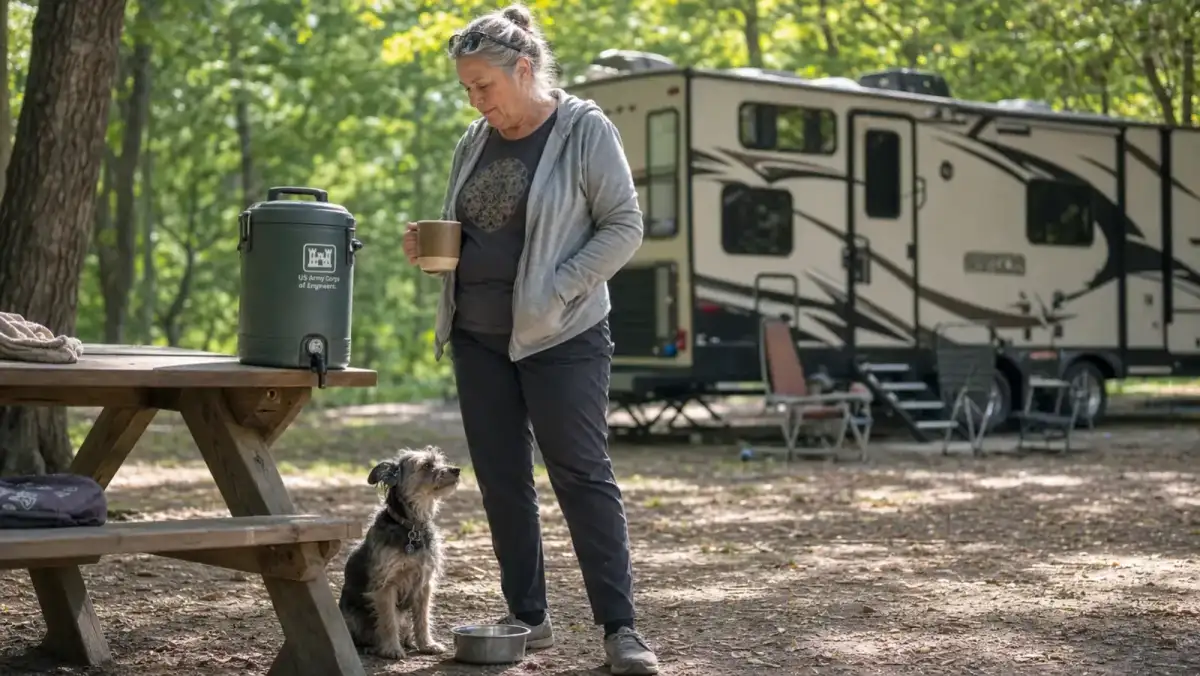
The Igloo insulated beverage dispenser has been sitting on my picnic table or the tailgate of my truck for going on sixteen months now, since I bought it in April of last year to replace a plain plastic water jug that never kept anything cold past lunch. I use it for drinking water first, dish water second, and Biscuit's bowl third, at every site I've stayed at since, a Corps of Engineers campground on Kentucky Lake, four state parks, and two more Corps campgrounds after that. Most reviews I read before I bought it were written about the first week of owning one.
Mine isn't about the first week. It's about everything that happens after, the parts that only show up once you've hauled a thing through a full hot summer, a couple of shoulder seasons, and the kind of daily grind where nobody's babying the gear. Some of what I found surprised me. None of it was bad enough to send the Igloo jug back, but I've got opinions about the spout, the smell it can develop if you get lazy, and how heavy the thing gets the moment you fill it.
The Quick Verdict
A genuinely tough water jug that keeps ice for days and pours without a mess, once you learn to respect how heavy it gets full and stay ahead of cleaning it.
Amazon Check Today's Price →One jug that handles drinking water, dish water, and the dog's bowl without a fight.
This is the same insulated dispenser I've filled at nearly every campsite for over a year, spout, spigot, and all. It holds ice longer than any jug I owned before it.
Amazon Check Today's Price on Amazon →How I've Used It
My routine hasn't changed much since the first trip. I fill it at home from the kitchen tap the night before I leave, add a full bag of ice on top, and set it in the truck bed for the drive. Once I'm parked, it goes on the picnic table if there's shade, or in the fold-down step well of the trailer if there isn't. From there it's my only water source at the site until I break camp, since a good number of the places I stay don't run a water line out to the pad. That's most of what I mean when I say I judge gear on whether one person can manage it alone. If the water isn't at the site, something has to hold it.
I use the spigot for everything. Filling my coffee pot in the morning, rinsing a plate before it goes in the wash tub, topping off Biscuit's bowl three or four times a day, and just plain drinking water when I don't feel like walking to the bathhouse. A jug that only does one of those jobs well isn't worth the space it takes up in the truck. This one has done all three since the day I bought it, and that's really the whole reason it earned a permanent spot.
What I didn't expect, going in, was how much the little details would matter over time. Anybody can review a cooler after one weekend and tell you it kept things cold. Sixteen months in, I can tell you which season stretches that promise thin, where the spout starts to slow down, and what happens if you forget to dry it out before it sits in the trailer for three weeks.
How Long the Ice Actually Lasts, Season to Season
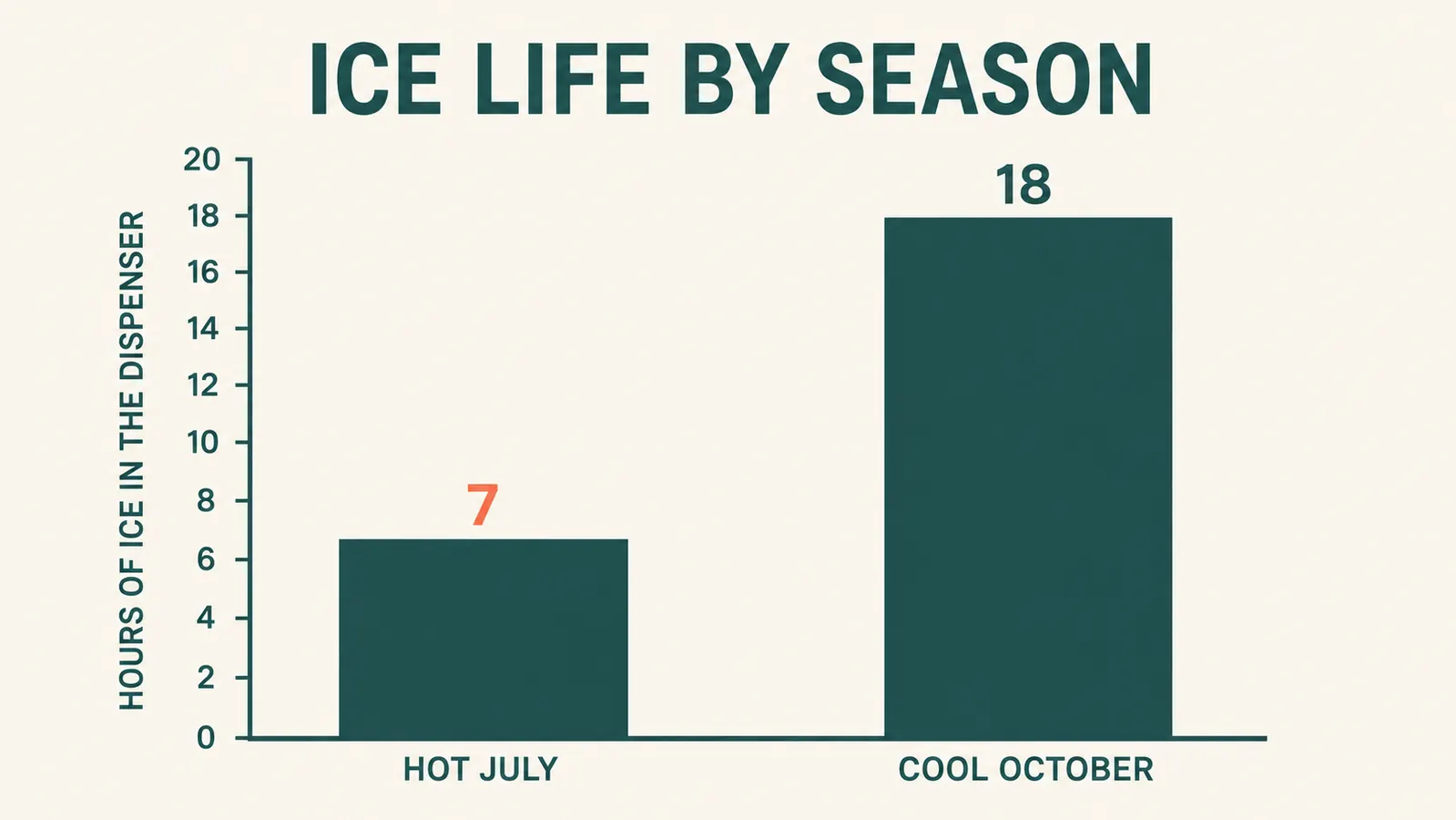
This is the number everybody wants and almost nobody reports honestly, because it depends so much on where you're camping and how often that spigot gets opened. In a hot July stretch at Kentucky Lake, temperatures in the low nineties most afternoons, filled with a full bag of cubed ice and about a gallon and a half of water on top, I get roughly two and a half days of actual ice, meaning cold water with ice still floating in it, not just cool water. By day three the ice is gone but the water stays noticeably cooler than the outside air for another day past that.
In October, at one of the state parks I visit most, with overnight lows in the forties and daytime highs barely cracking seventy, that same fill has lasted me a full four days with ice still present, sometimes closer to five if I keep the lid shut between uses and don't leave it sitting in direct sun. The chart above is close to what I've clocked with a kitchen thermometer dropped in periodically, not a lab test, but consistent enough across a dozen or more trips that I trust the pattern.
The one thing that shortens ice life faster than the weather is how often I'm opening that spigot. A quiet mid-week stay where I'm mostly filling my own cup and Biscuit's bowl stretches the ice further than a weekend when I've got a grandkid visiting and the spout is getting worked every twenty minutes. Every time that lever opens, warm air gets in. It's a small thing, but it adds up across a long stay.
The Spout: Drips, Slowdowns, and What Actually Happens Over Time
The spigot was the part I worried about most before I bought it, because I've owned cheaper dispensers where the spout either drips constantly or clogs up within a month. This one has held up better than I expected, but it isn't flawless, and I'd rather tell you the truth than pretend it's perfect.
For the first several months, it sealed clean every time. No drip between uses, no slow leak overnight. Around the eight or nine month mark, I started noticing a very light drip after filling with ice, maybe one drop every couple of minutes, enough that I now sit a small towel underneath it out of habit. It hasn't gotten worse since, and it doesn't happen at all when I'm running plain water without ice, so my guess is a bit of the gasket has softened slightly from the cold cycling. It's a minor annoyance, not a real flaw, but it's the kind of thing a one-week review would never catch.
Clogging has only happened to me once, and it was my own fault. I'd used the Igloo dispenser for lemonade at a family gathering and didn't rinse the spigot channel well before switching back to plain water. A few days later the flow had slowed to a trickle. Pulling the spigot assembly out and running warm water through it with an old toothbrush fixed it in about five minutes. Since then I flush it with plain water any time I've put anything besides ice water through it, and I haven't had the problem again.
Keeping It From Going Musty Between Trips
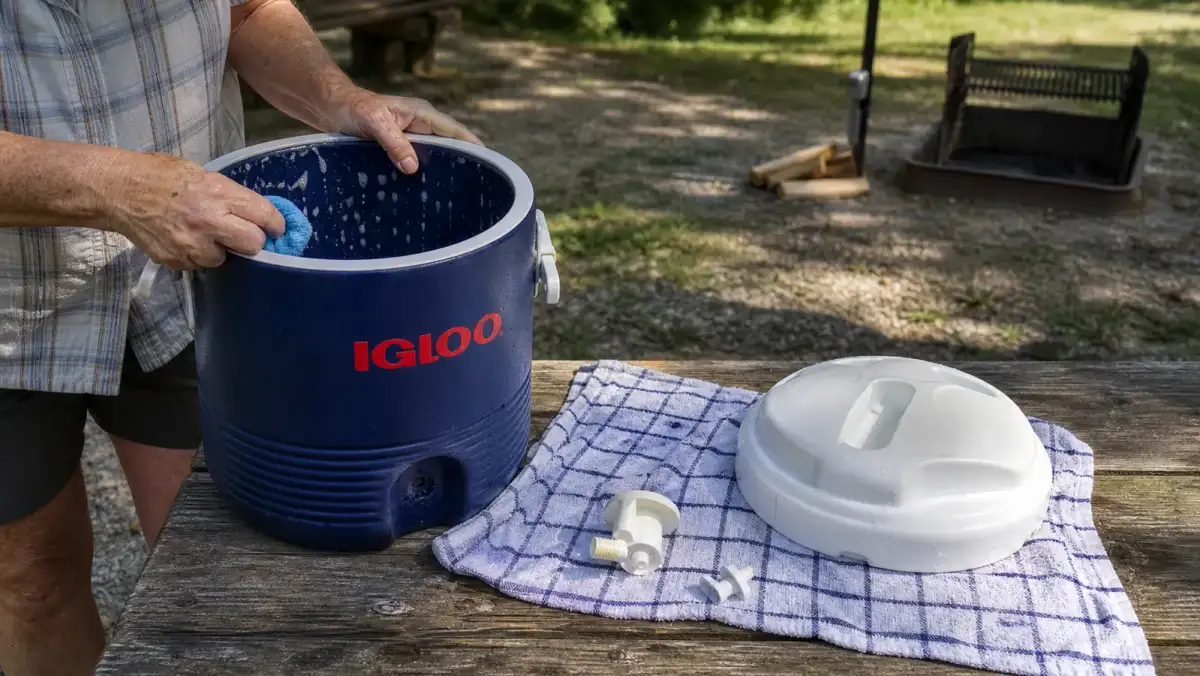
This is the part nobody warns you about, and it's the closest I've come to genuinely disliking this jug. If I pack it away wet, even just a little water left in the bottom, and it sits in the trailer's outside compartment for two or three weeks between trips, it develops a flat, plasticky smell that isn't quite mold but isn't pleasant either. The first time it happened, I nearly wrote the whole thing off.
What fixed it, and what I now do every single time without exception, is a rinse with a diluted vinegar and water mix after the last use of a trip, followed by leaving the lid and spigot off to air dry for a full day before I pack it away. I learned to do this by the third trip, and I haven't had the smell come back since. It costs me maybe ten extra minutes at the end of a stay. Skip it once and you'll remember why you shouldn't skip it again.
Filling It Alone When It's Heavy
Nobody hands you a second pair of arms out here, so weight matters to me more than it probably would to most reviewers. Empty, this thing is light enough to tuck under one arm. Full, with ice and water both, it's genuinely heavy, somewhere in the neighborhood of twenty-five to thirty pounds by my kitchen scale's estimate when I've weighed it partway through filling. That's not a jug I want to lift shoulder-high or carry any real distance by myself.
What I've settled into is filling it in stages rather than all at once. I fill it about halfway at the spigot, set it wherever it's going to live for the stay, then top off the rest with a pitcher instead of trying to carry a full dispenser from the truck to the table. It sounds like a small workaround, but it's saved my back more than once, and it means I never have to ask anybody at the next site over for a hand. That's the whole test for me. If it takes two people or a strong back to move once it's full, it doesn't belong at my camp.
No Water at the Pad: Where This Really Earns Its Keep
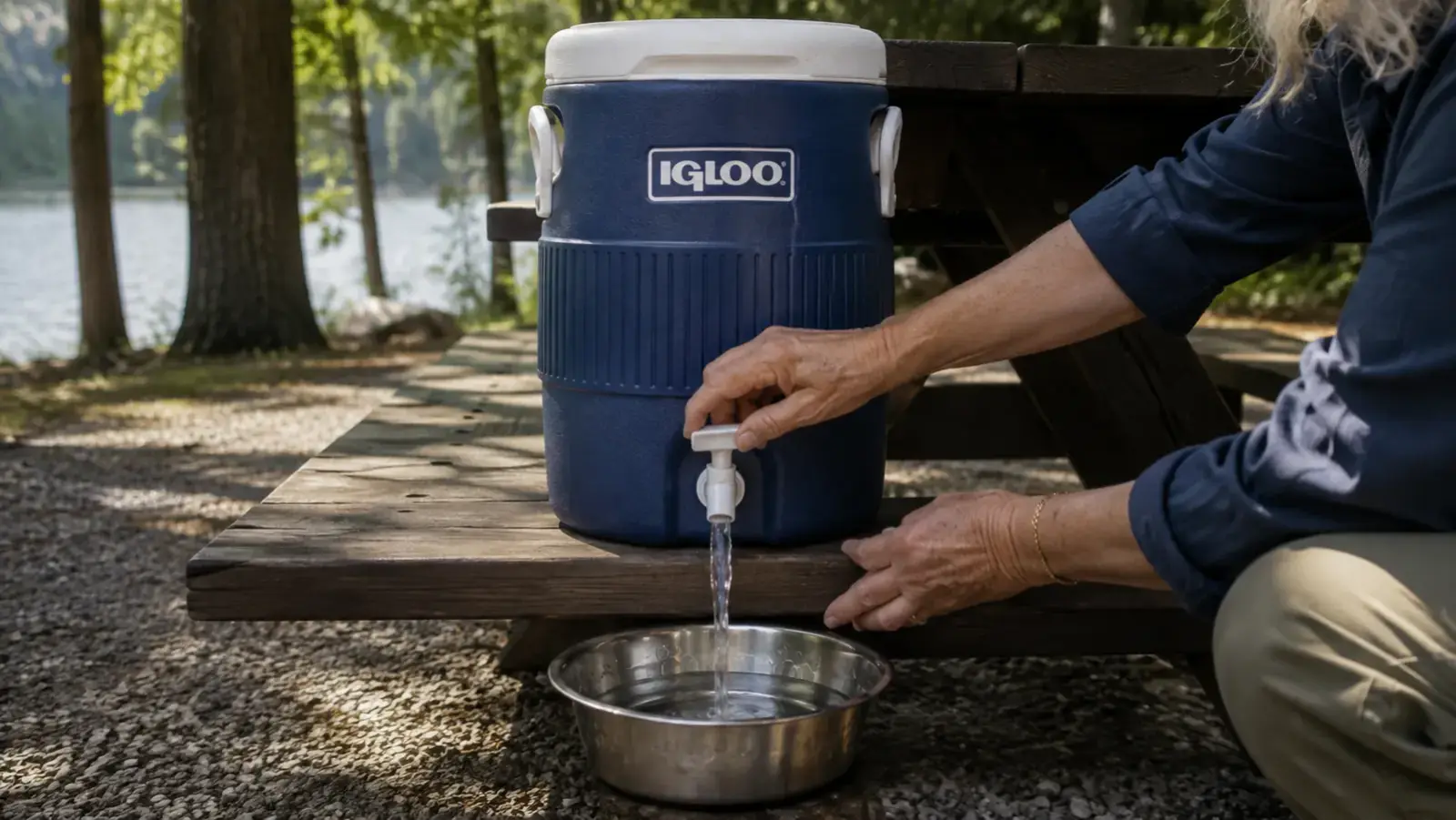
A fair number of the sites I book, especially the older loops at some of the state parks and a couple of the Corps campgrounds, don't run water out to individual pads. You either haul from a central spigot or you go without between trips to the bathhouse. Before I had this dispenser, that meant multiple trips a day with a plastic jug that sweated all over the truck seat and went lukewarm within a few hours.
Now I haul once, first thing in the morning, fill the dispenser and my kettle both, and I'm set for the day. That single change has probably saved me more walking than any other piece of gear I've bought in the last two years. It also means Biscuit never runs dry waiting on me to make another trip. I keep his bowl right next to the jug and top it off from the spigot every time I walk past, which is a lot easier on my knees than bending over a hose bib four times a day.
What I Liked
- Holds ice noticeably longer in cool shoulder-season weather than in peak summer heat
- Spigot has stayed reliable for over a year with only one easily fixed clog, self-inflicted
- Handles drinking water, dish water, and dog water without any of the three suffering
- One trip to haul water covers a full day at sites with no water at the pad
Where It Falls Short
- Develops a musty smell fast if packed away wet, so drying it fully is not optional
- Full, it's genuinely heavy, closer to thirty pounds, not a one-lift job for me anymore
- A very light drip has developed after ice fills starting around month eight or nine
A one-week review can tell you it kept water cold. Sixteen months in, I can tell you exactly which season stretches that promise thin, and what happens if you skip the vinegar rinse just once.
Who This Is For
If you're camping mid-week at sites without water hookups, traveling with a pet who needs a bowl topped off regularly, or you're simply tired of a plastic jug that turns your drinking water lukewarm by early afternoon, this earns its space. It's also a good fit if you're setting up camp by yourself and want one water source that covers drinking, cooking, and dishes instead of juggling three separate containers. The reasons I keep coming back to this one mostly come down to that single-jug simplicity.
It's also worth it if you camp in genuinely hot weather and have been disappointed by cheaper insulated jugs that promise all-day ice and deliver an afternoon of it instead. This one, even at its shortest ice life in July heat, has outlasted every plain plastic jug I owned before it by at least a full day.
Who Should Skip It
If you're always camping somewhere with a spigot right at your site, or you travel light and don't want to manage another piece of gear that needs drying out between trips, this might be more than you need. It's also not the choice for anyone who can't commit to that ten-minute rinse-and-dry routine at the end of a stay, because skipping it is the one thing that will genuinely sour you on this jug. If weight is your biggest concern once it's full of ice and water, it's worth reading how it stacks up against a lighter option in my side-by-side comparison before you decide.
Stop hauling three trips a day for water that goes warm by noon.
One fill in the morning covers drinking water, dish water, and the dog's bowl at nearly every site I've stayed at for over a year now.
Amazon Check Today's Price on Amazon →