
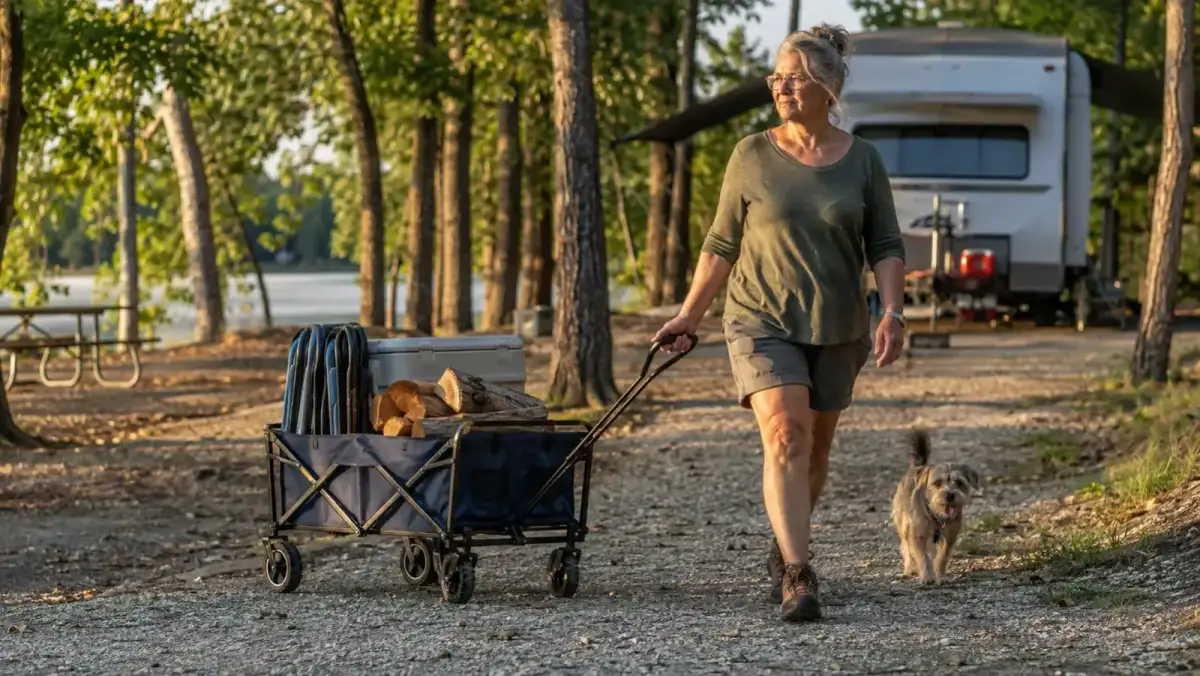
If you've stood in the aisle at the outdoor store, or scrolled through Amazon at midnight, trying to decide between a Mac Sports collapsible wagon and a Radio Flyer, I can save you some of that back and forth. I've owned both, one at a time, about four camping seasons apart, and I've hauled everything from split firewood to a cast iron griddle to two folding chairs and a full water jug across gravel pads and grass loops with each of them. The short answer is this. If you camp alone the way I do most of the year, the Mac Sports wagon wins, and it isn't close. If you want a wagon that will still be rolling in twenty years and you don't mind it taking up permanent space in a truck bed or garage, the Radio Flyer earns its keep too. Neither one is a bad wagon. They're just built for two different lives.
I bought my first wagon, a Radio Flyer, back when my husband was still around to help me lift the far end of it up into the bed of the truck. It was a good wagon then and it's still a good wagon now, sitting in my son's garage since I stopped hauling it a few years back. When I started pulling my 24-foot trailer by myself after he passed, I traded that wagon in for the Mac Sports collapsible, mostly because I needed something I could fold flat and carry to the truck myself, no second set of hands required, no strategy for wrestling it up over a tailgate. That's really the whole story of this comparison. It was never about which wagon is better built. It's about which wagon still works when there's only one of you doing the loading.
| Mac Sports Collapsible Wagon | Radio Flyer Steel Wagon | |
|---|---|---|
| Folded storage size | Folds flat to about 20 x 20 x 40 inches, fits in a trailer pass-through or SUV trunk | Does not fold, permanently about 36 x 21 x 22 inches, needs its own dedicated space |
| Empty weight | Around 23 pounds, one person can lift it in and out of a vehicle alone | Around 40 to 45 pounds of welded steel, awkward for one person to load solo |
| Load capacity | 150 pounds, plenty for camp chairs, a griddle, and a water jug but a real ceiling | Roughly 200 pounds, rated for heavier hauls like split firewood or a full cooler stack |
| Terrain handling on grass and gravel | 8 inch all-terrain wheels roll fine on packed gravel, work harder in soft grass or sand | Larger steel wheels and a rigid frame plow through ruts and roots with less effort |
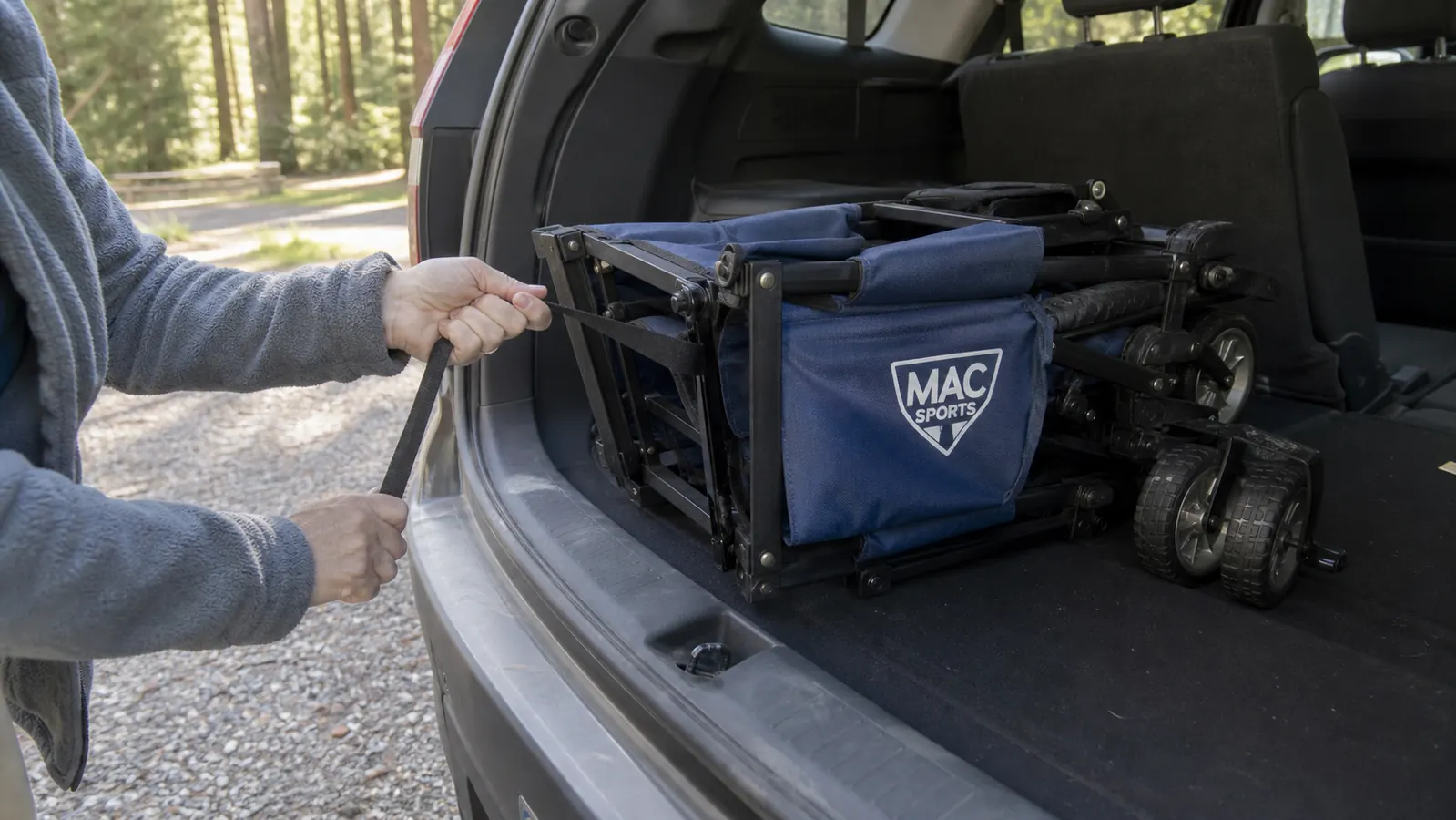
| One-person load and unload | Center pull strap opens and closes it in seconds, telescoping handle, built for solo use | No folding mechanism to fuss with, but lifting it fully loaded alone strains the back |
| Bed material and cleanup | Removable fabric liner hoses off easily but can sag a little under an unevenly stacked load | Rigid steel bed does not sag under uneven or pointy loads, wipes clean, ages slowly |
| Value for a solo camper | Lower cost, folds small enough to justify keeping it in the trailer permanently | Higher upfront cost, but a one-time buy that outlasts most other camp gear |
Where the Radio Flyer Wins
I want to give the Radio Flyer its due, because it deserves it. There is no folding hinge anywhere on that wagon, which means there is nothing to eventually wear loose, nothing to bind up with campsite dirt, nothing that can fail to lock into place on a cold morning. The steel bed is rated to haul more weight than the Mac Sports, close to 200 pounds by most accounts, which matters if you're hauling firewood by the armload or packing out a cooler that's still mostly full of ice and cans. The bigger steel wheels also handle rough ground with less fuss. Roots, ruts, and the gravel washboard sections some Corps of Engineers campgrounds have near the boat ramps don't slow it down the way they can slow a lighter folding wagon.
My old Radio Flyer hauled firewood at four different state parks for well over a decade before I retired it from camp duty, and it never once needed a repair. It just sat there being steel, doing what steel does, which is outlast almost everything around it. If I still had someone to help me lift the loaded end into a truck bed, or if I had a permanent spot for it in a garage instead of a trailer with limited storage, I'd probably still be using it today. It is, in plain terms, the more rugged of the two wagons. That's not a small thing to say about a piece of gear.
Where the Mac Sports Wagon Wins
Here's where my situation is probably a lot like yours, or will be eventually. I don't have a garage. I have a 24-foot travel trailer with a pass-through storage bay that already holds camp chairs, a folding table, and whatever else earns a permanent spot in there. A wagon that doesn't fold has to ride loose in a truck bed or get left behind, and I wasn't willing to leave a wagon behind. The Mac Sports collapses flat to about the size of a large suitcase in under a minute, using a single center pull strap, and it slides into that pass-through bay next to everything else. That single fact settled the decision for me before I'd even gotten to load capacity or wheels.
Weight is the other piece nobody talks about enough. At 23 pounds empty, I can lift the Mac Sports wagon in and out of the trailer bay by myself without bracing for it, which is more than I can say for a lot of camp gear at my age. The Radio Flyer's extra 20 pounds of welded steel doesn't sound like much on paper, but it's the difference between a wagon I can move alone and one I need to plan around. The telescoping handle on the Mac Sports also locks at a height that doesn't make me stoop, which matters more on the fifth trip from the truck than it does on the first.
The removable fabric liner is a smaller point but a real one. After a muddy stretch of trail at one of my Corps of Engineers campgrounds, I unclipped the liner, hosed it off at the water spigot, and had it dry by the next morning. Try that with a welded steel bed. You're wiping it down by hand and hoping you got the corners, and eventually it's going to show some surface rust if you're not careful about it, especially living in a trailer that spends most of the year exposed to the weather the way mine does.
I first put the Mac Sports through a real test at a Corps of Engineers campground on Kentucky Lake, a mid-week stay in early fall when I had most of the loop to myself. My site was a good hundred yards from where I could park, down a gravel path that curved around toward the water. In one trip I hauled the folding table, two chairs, a full cooler, and Biscuit's water bowl, and folded the whole wagon flat again in under a minute once I was done. That's the kind of afternoon this wagon was built for. It isn't fancier than a Radio Flyer. It's just built around the fact that I'm doing this alone.
If you're loading and unloading camp gear by yourself, this is the wagon that was actually built for that.
150 pounds of capacity, folds flat in under a minute, and light enough at 23 pounds that one person can manage the whole job without help.
Amazon Check Today's Price on Amazon →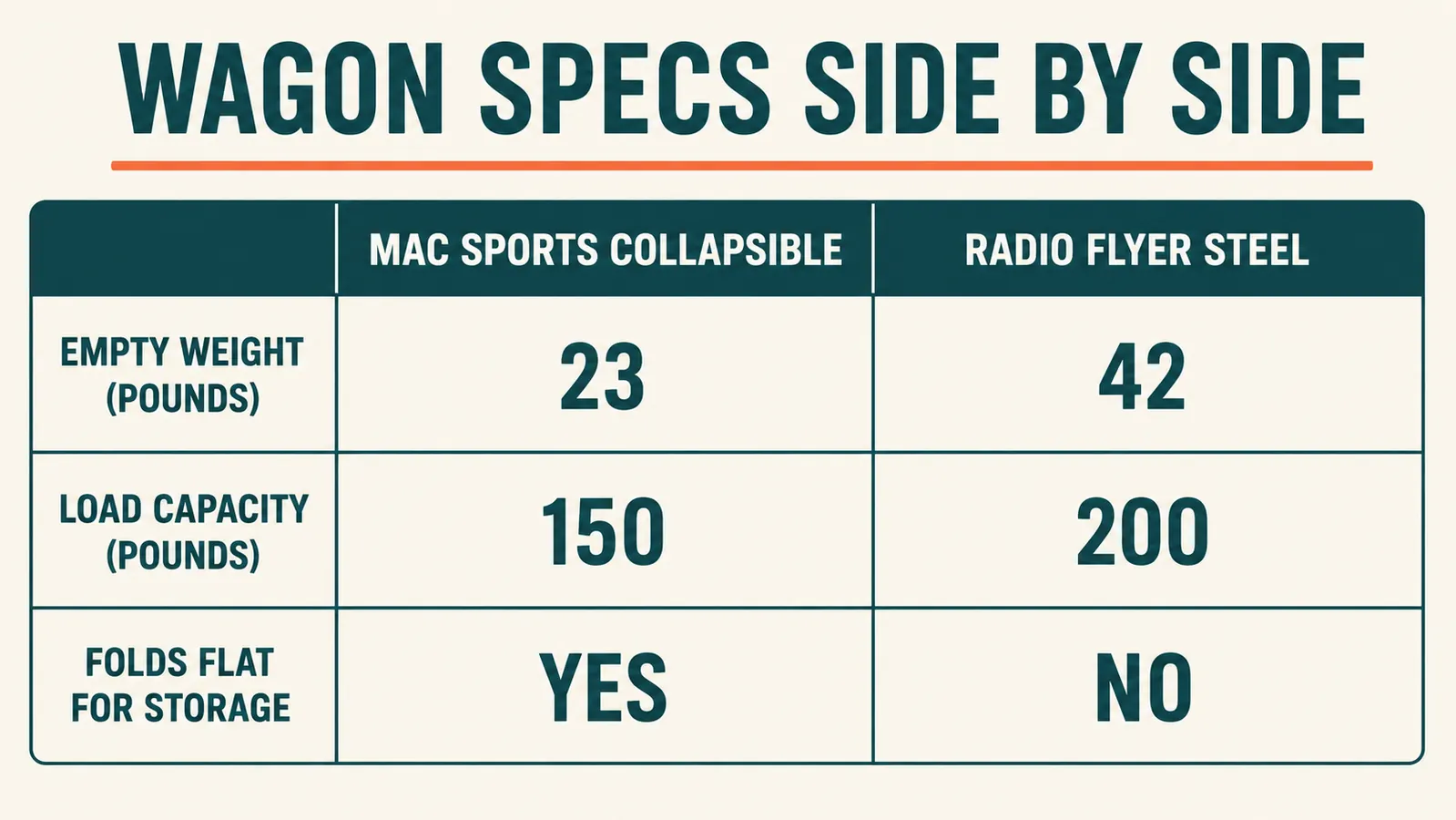
The Loading Test That Settled It For Me
Before I made up my mind for good, I ran the same loading routine with both wagons over the same week, back when my son still had the old Radio Flyer in his garage and let me borrow it one more time. I loaded firewood, a cooler, camp chairs, and the griddle into each wagon and hauled them from the truck to a site about the same distance as my usual Kentucky Lake spot. The Radio Flyer handled the actual hauling a shade better once loaded, the bigger wheels rolling over the gravel washboard with barely a jolt. But getting it loaded into the truck bed in the first place, and getting it back out again empty, took real effort and one sore shoulder by the end of the week.
The Mac Sports wagon rolled a little rougher over the same rutted gravel, especially in one soft patch near the boat ramp, but I never once struggled to get it in or out of the trailer, loaded or empty. I've since used it at all four of my regular state parks and both of the other Corps campgrounds I camp, and the pattern holds steady. Grass and packed gravel are no trouble either way. It's the deep ruts and washboard sections where the Radio Flyer has a real edge. For most of my camping, that edge doesn't come up often enough to outweigh being able to fold the whole wagon flat and carry it myself.
Who Should Buy Which
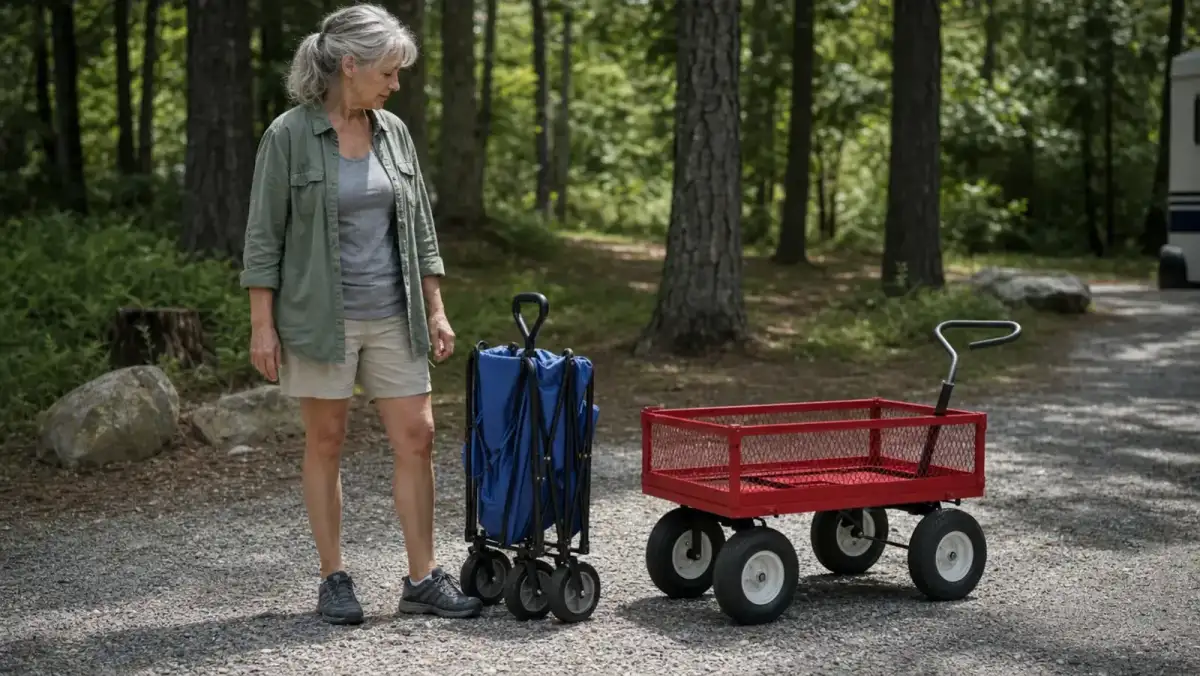
If you camp alone, tow a trailer with limited storage, or you're past the point of wanting to lift 40 pounds of welded steel into a truck bed by yourself, get the Mac Sports. It folds small enough to earn a permanent spot in the rig, it's light enough to manage solo, and 150 pounds of capacity covers everything most of us actually haul to a campsite. I wrote up a full season of daily use with mine in my long-term review, including the one hinge issue I ran into and how it held up after real weather, if you want the longer version before you decide.
If you're hauling heavier loads regularly, splitting and stacking a lot of firewood, camping with a second set of hands who can help load it, or you've got a garage where a rigid wagon can live permanently without folding into anyone's way, the Radio Flyer is the more rugged choice and it will likely outlast the Mac Sports by a wide margin. I don't think either wagon is the wrong answer. I think most solo campers, especially the ones setting up camp without help the way I do, are going to land where I landed. I go into the small stuff nobody mentions, the wheel noise on gravel and how the fabric liner has held up after repeated hosing, in my honest review of this wagon if you want every detail before you buy.
One wagon, folded flat, ready whenever you're loading camp alone.
The same collapsible wagon I've hauled gear with at every campground I visit, light enough to manage without help and small enough to actually store.
Amazon Check Today's Price on Amazon →