
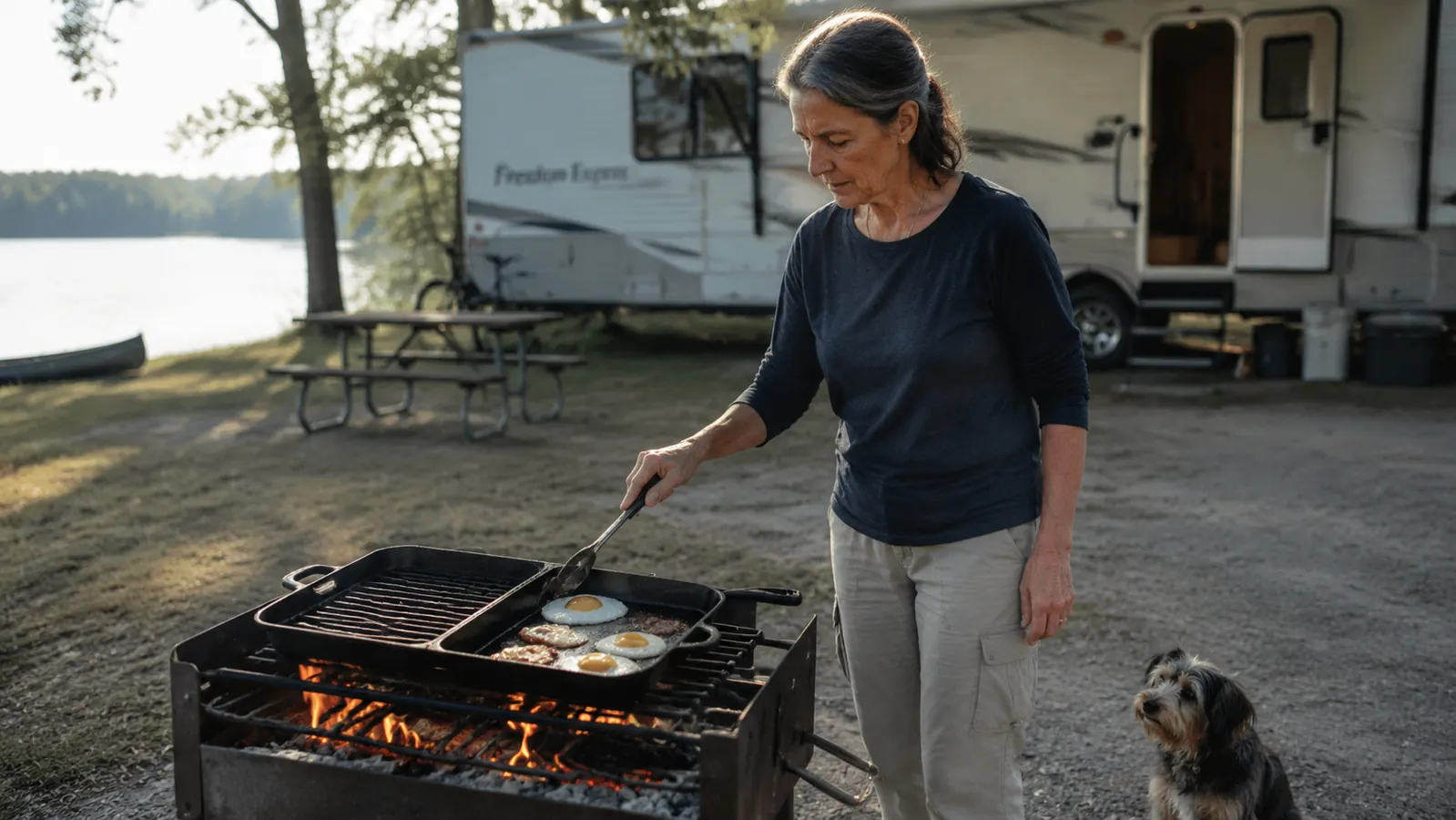
For years my kitchen box held three pans I hardly ever used all at once: a griddle for eggs, a grill pan for burgers, and a saucepan I mostly kept around for reheating leftovers flat instead of in a pot. Space in a 24-foot trailer is not generous, and every pan I keep is a pan that isn't holding something else, like Biscuit's food or the extra blanket I bring for cold nights on Kentucky Lake. The Lodge reversible cast iron grill and griddle pan is the reason my kitchen box got lighter instead of heavier, even though the pan itself is the heaviest single thing in it now.
I've cooked on this one at four state parks and two Corps of Engineers campgrounds, over a fire grate, on a two-burner camp stove, and on the little propane range built into the trailer. It hasn't let me down at any of them, and it's talked me out of buying two other pans I used to think I needed. Here's what actually earns it a permanent spot, one reason at a time, weight and all.
Tired of hauling three pans for one breakfast? Start with the one that does all three jobs.
This is the exact Lodge reversible griddle I've used at every site since I picked it up, ridged side for the fire grate, flat side for the trailer stove.
Amazon Check Today's Price on Amazon →It's Two Pans in One, Not a Compromise on Either
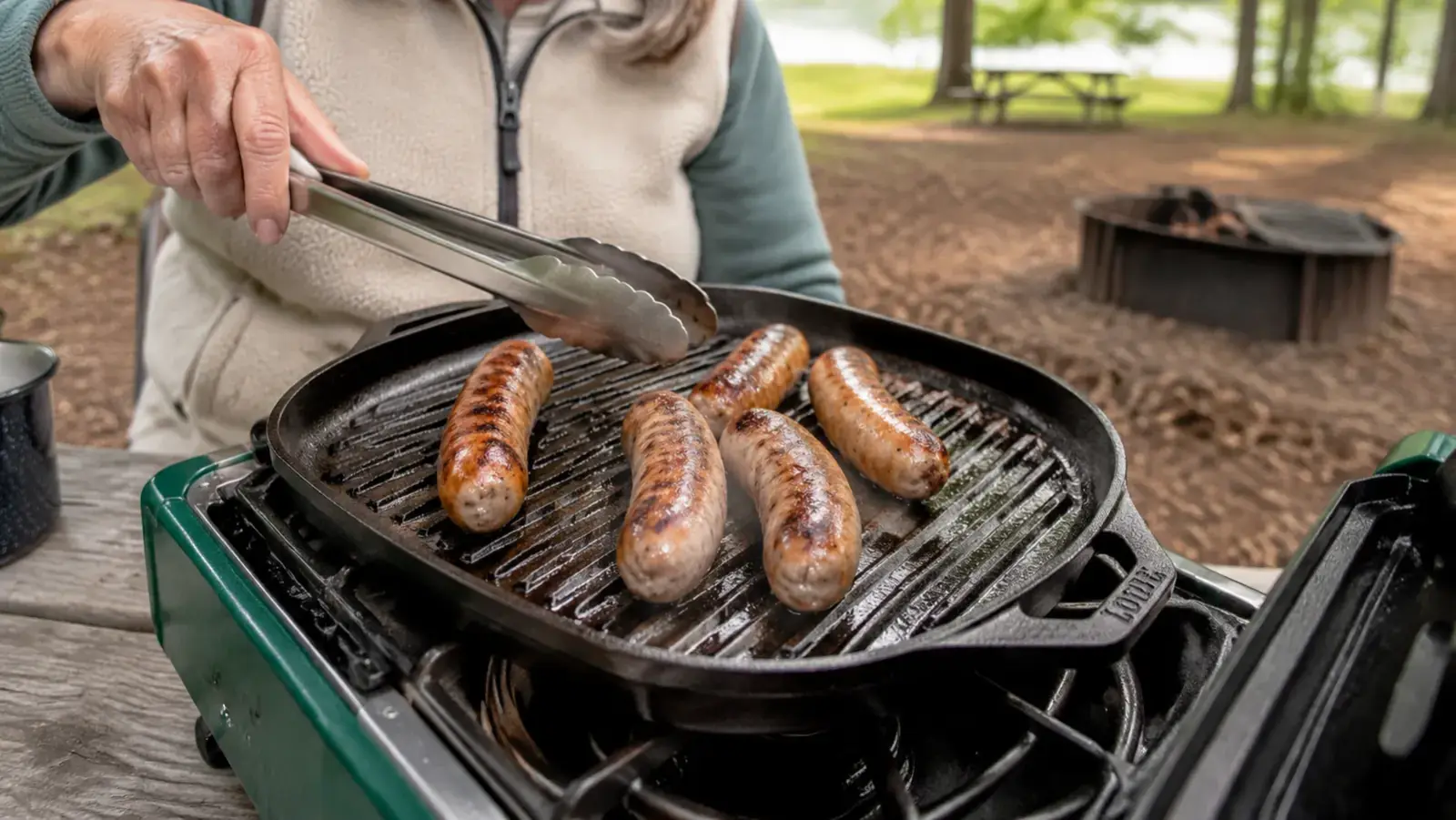
One side is ridged for grilling, the other flat for griddle work, and I use both in the same week depending on what I'm cooking. Burgers and sausage go on the ridged side, so the fat drains into the grooves instead of sitting under the meat. Eggs, pancakes, and grilled cheese go on the flat side, where nothing catches in a ridge and burns before it should. I flip the whole pan over between meals, not the food, and that one design choice is why I never bought a second pan.
It Doesn't Care Which Heat Source You've Got That Night
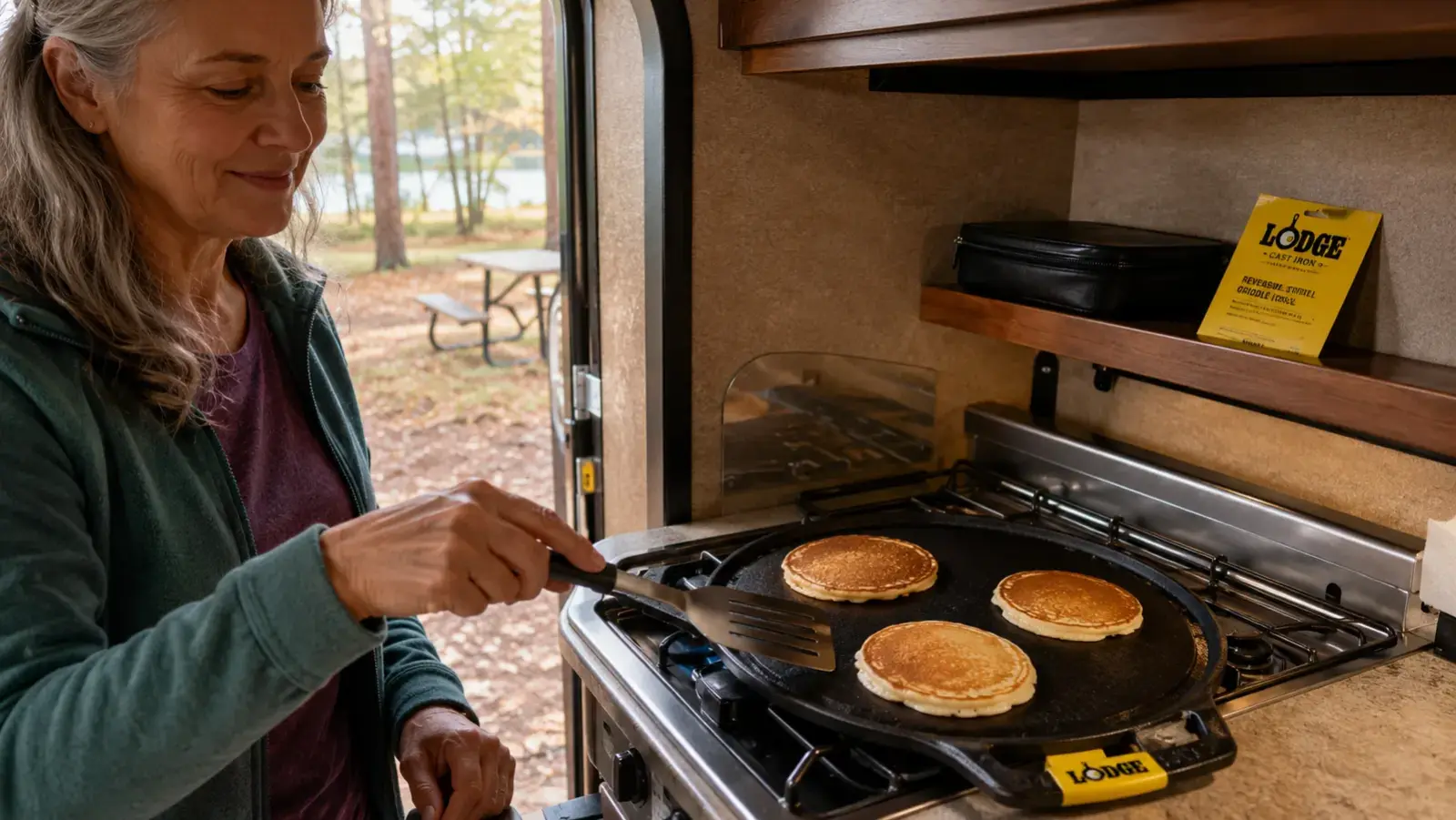
Some campsites give you a fire grate and nothing else. Some nights it's the two-burner stove set up on the picnic table. Some mornings I'm just cooking off the propane range built into the trailer because I don't feel like going outside at all. This pan has sat on all three without complaint, no adapter, no special rack, no adjustment. Cast iron doesn't know the difference between a campfire and a stove burner, and neither does this pan.
It Replaced My Griddle, My Grill Pan, and Half My Excuses
I used to pack a nonstick griddle, a ridged grill pan, and a saucepan just for reheating leftovers flat instead of in a pot. All three lived in the same cabinet, the same cabinet I now use for Biscuit's food and the cats' travel bowls. This one pan does the job of the first two outright, and reheating a plate on the flat side works about as well as any saucepan ever did. Fewer pans means fewer things to wash, dry, and find a spot for at every campsite.
It Gets Better the Longer I Own It, Not Worse
It came pre-seasoned, which mattered to me, because I wasn't about to spend a weekend seasoning cast iron from bare metal. But the surface now, after a full season of bacon grease and butter, releases eggs better than it did the day I bought it. That's the opposite of every nonstick pan I've owned, which start out good and go downhill the day a metal spatula scratches them. This one only asks that I stick to the simple routine I lay out in how to season a cast iron camp griddle, and it keeps paying that back.
It's Big Enough When Someone Wanders Over at Breakfast
Mid-week camping means quiet sites, but it doesn't mean no neighbors. More than once the fellow two sites down has wandered over with a cup of coffee just as I started cooking, and the 16.75 by 9.5 inch surface has room for a few extra eggs or another round of pancakes without anyone waiting on a second batch. I don't camp to entertain, but I've learned that a griddle with real surface area turns an awkward moment into an easy one.
It Also Works Just Fine When It's Only Me and Biscuit
Not every morning needs the full surface. Half the time it's just two eggs and a couple pieces of toast for me, with Biscuit parked by the fire ring waiting for whatever falls. One pan, one cooking surface, one thing to wipe down after. I don't heat a saucepan for the eggs and dig out a separate skillet for anything else. Camping alone means every extra pan is a pan only I am going to wash, so the fewer of them, the better my mornings go.
It Holds Its Heat When the Wind Won't Leave the Flame Alone
Kentucky Lake gets a real wind off the water some afternoons, and I've watched a thin steel pan lose its heat in about a minute flat every time a gust came through. Cast iron doesn't do that. It stores heat in the metal itself, so a few seconds of wind guttering the flame doesn't undercook whatever's on the pan. I've finished full breakfasts on windy mornings that would have left a thinner pan lukewarm and my eggs half done in the middle.
Cleanup Doesn't Require a Sink Full of Water I Don't Have
My trailer sink holds what it holds, and I'm not running the water pump longer than I have to on a boondock stay. A hot pan, a paper towel, and a little coarse salt if something stuck is usually all the cleanup this griddle needs. No soap required most days, since soap is actually what strips the seasoning I've spent a season building up. I wipe it out at the fire ring most nights before it ever comes back inside the trailer.
It's Outlasted Every Nonstick Pan I Ever Bought for Camp
I went through two nonstick griddles before this one, and both scratched, flaked, or warped within a season or two of campfire heat, which runs hotter and less even than a kitchen stovetop. This is PFAS free cast iron, and there's no coating to scratch off in the first place. Short of dropping it or leaving it out to rust in the rain, there isn't much that ends this pan's useful life. I expect to hand this one down before I ever throw it out.
It Costs About What Two Cheap Pans Would, and Should Outlive Both
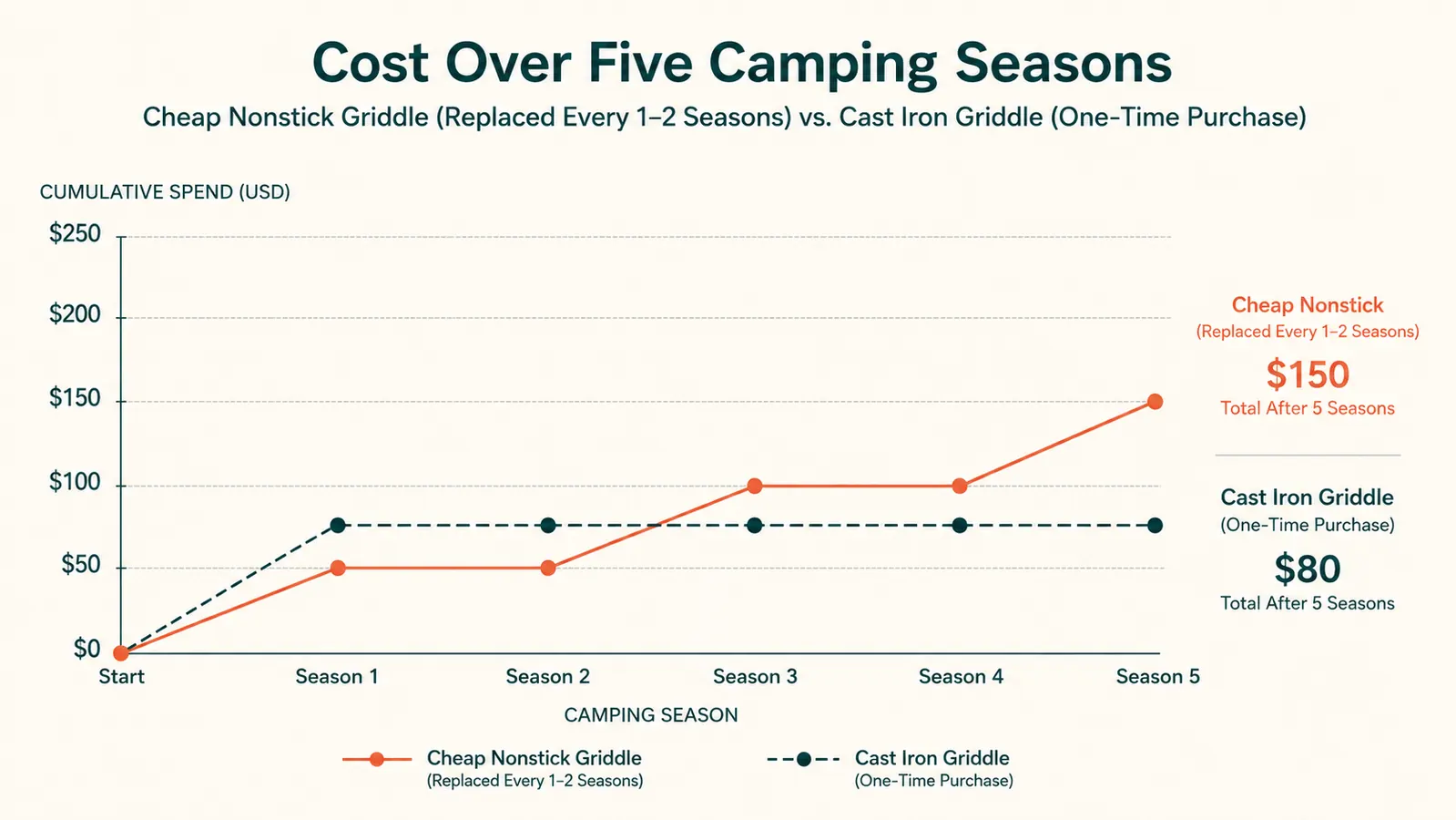
I won't pretend cast iron is the cheapest option on the shelf. But I've replaced enough thin nonstick griddles to know that price tag repeats every year or two, while this one is still the same pan I bought at the start. Measured against how many seasons it's going to cook breakfast, it's the better math, not the flashier one. I'd rather pay once for something that lasts than pay a little less, twice a year, for something that doesn't.
What I'd Skip
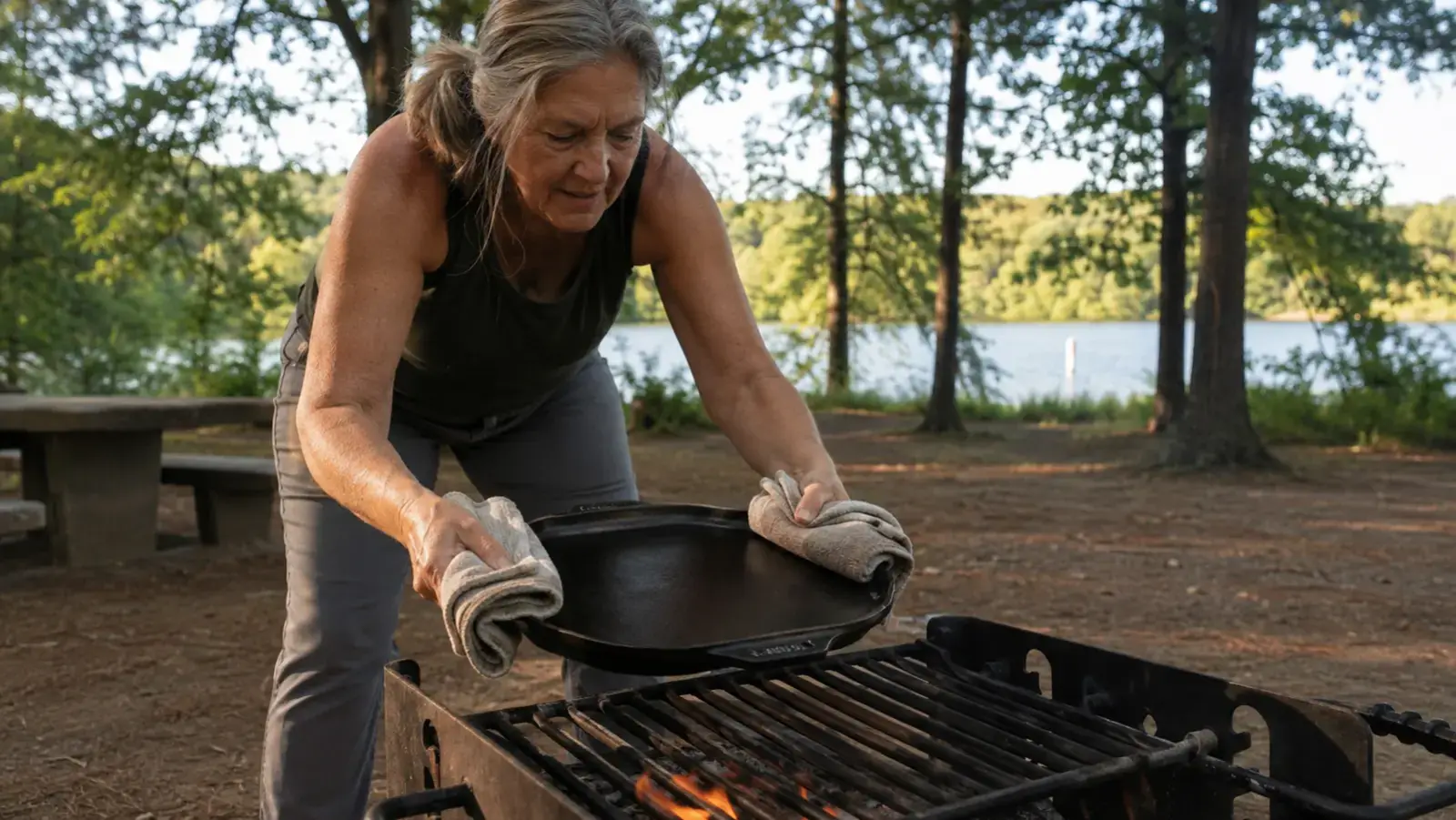
I won't pretend this pan is light. Bare, it weighs about seven and a half pounds, and you feel every bit of that lifting it off a fire grate or sliding it in and out of the trailer's tiny oven. If your hands or shoulders already give you trouble, pick this up in a store before you order it, because a pan too heavy to lift safely off high heat isn't one you should handle alone at a campsite. I manage it fine, both hands, a folded towel, no rushing off the grate. If a lighter aluminum griddle gets you cooking without strain, that's the better call for you, even though it won't last the way this one has for me, a full season in, according to my long-term review.
I didn't want a pan that impressed anyone. I wanted one pan that could handle a fire grate, a camp stove, and a trailer range without ever asking me to pack a second one.
One pan, three heat sources, one less thing to pack next trip.
This is the same reversible Lodge grill and griddle pan I've used at every site since I bought it, ridged side for the grate, flat side for eggs.
Amazon Check Today's Price on Amazon →