
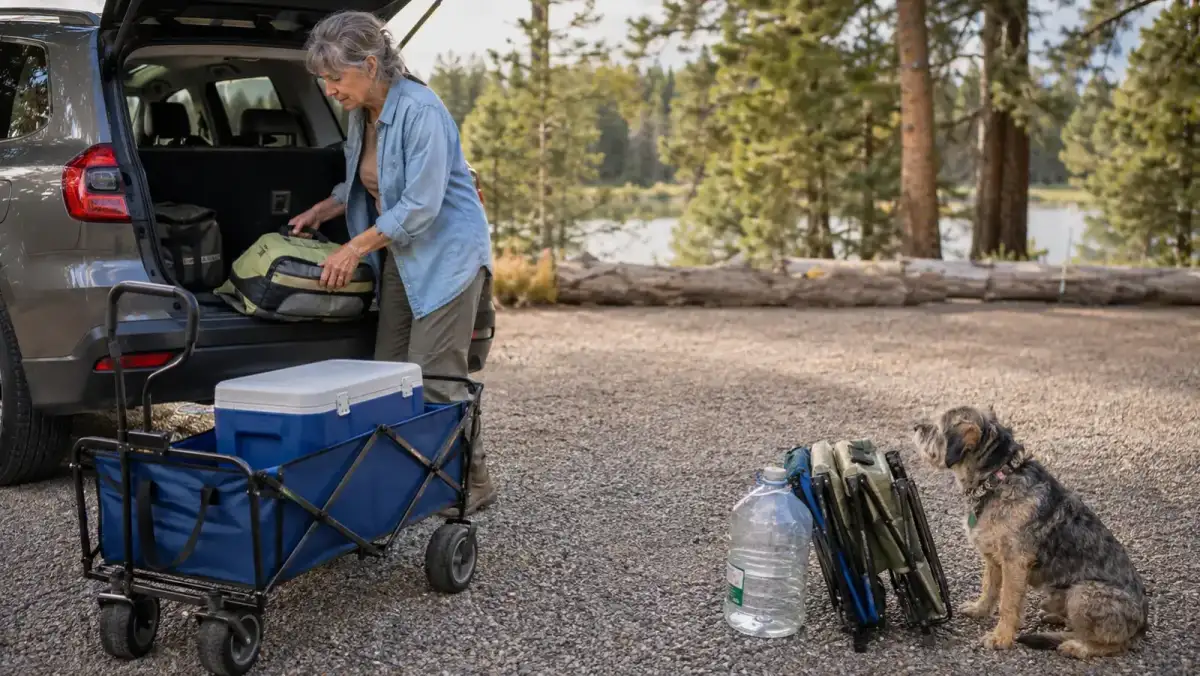
I learned how to load a wagon the same way I learned most things about camping alone, by doing it wrong first. My first few trips with the Mac Sports collapsible wagon, I tossed the cooler in wherever it landed, stacked the chairs on top, and wondered why the whole load kept sliding to one side on the gravel path down to my site. One afternoon at a Corps of Engineers campground on Kentucky Lake, the front end of that wagon actually lifted clean off the ground when I pulled, because I'd piled the heavy stuff too close to the handle without thinking about it. Nothing broke that day, but I got a real education in why loading order matters just as much as owning the wagon in the first place.
A wagon that pulls easy and stays put is not an accident. It's a handful of habits, most of them obvious once someone points them out, and every one of them matters more when you're loading it by yourself with no one to steady the other end. This is the order I use now, every single time, whether I'm hauling gear a hundred feet or a couple hundred yards down a campground loop.
Load it right and one trip does what used to take three.
This is the exact wagon I've settled into a loading routine with, rated for 150 pounds and built to fold flat when the hauling is done.
Amazon Check Today's Price on Amazon →Step 1: Open It and Lock the Frame Before You Touch Your Gear
This sounds too simple to mention, and I mention it anyway because I've skipped it and paid for it. A collapsible wagon has to be pulled fully open and locked into its rigid position before anything goes into the bed. If the frame isn't locked out all the way, the whole thing has a little give in it, a wobble you won't notice until you've already got forty pounds sitting in the fabric and the frame shifts under the weight.
I check the lock by grabbing both side rails and giving the frame a firm shake before I load anything. If it flexes or feels springy, it isn't locked, and I go back and reset it. Takes five seconds standing there with nothing in the bed. Takes a lot longer, and a lot more frustration, if you catch it after the cooler's already sitting on top of an unlocked frame on a gravel slope.
Step 2: Put the Heaviest Item Low and Centered Over the Axle
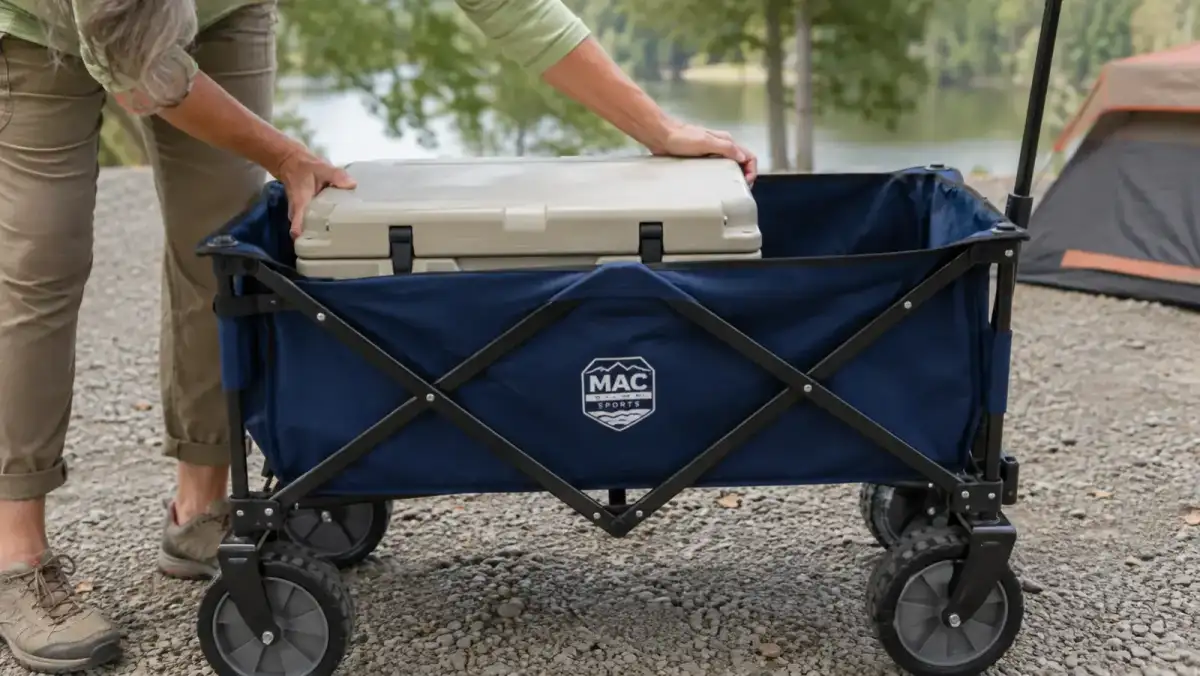
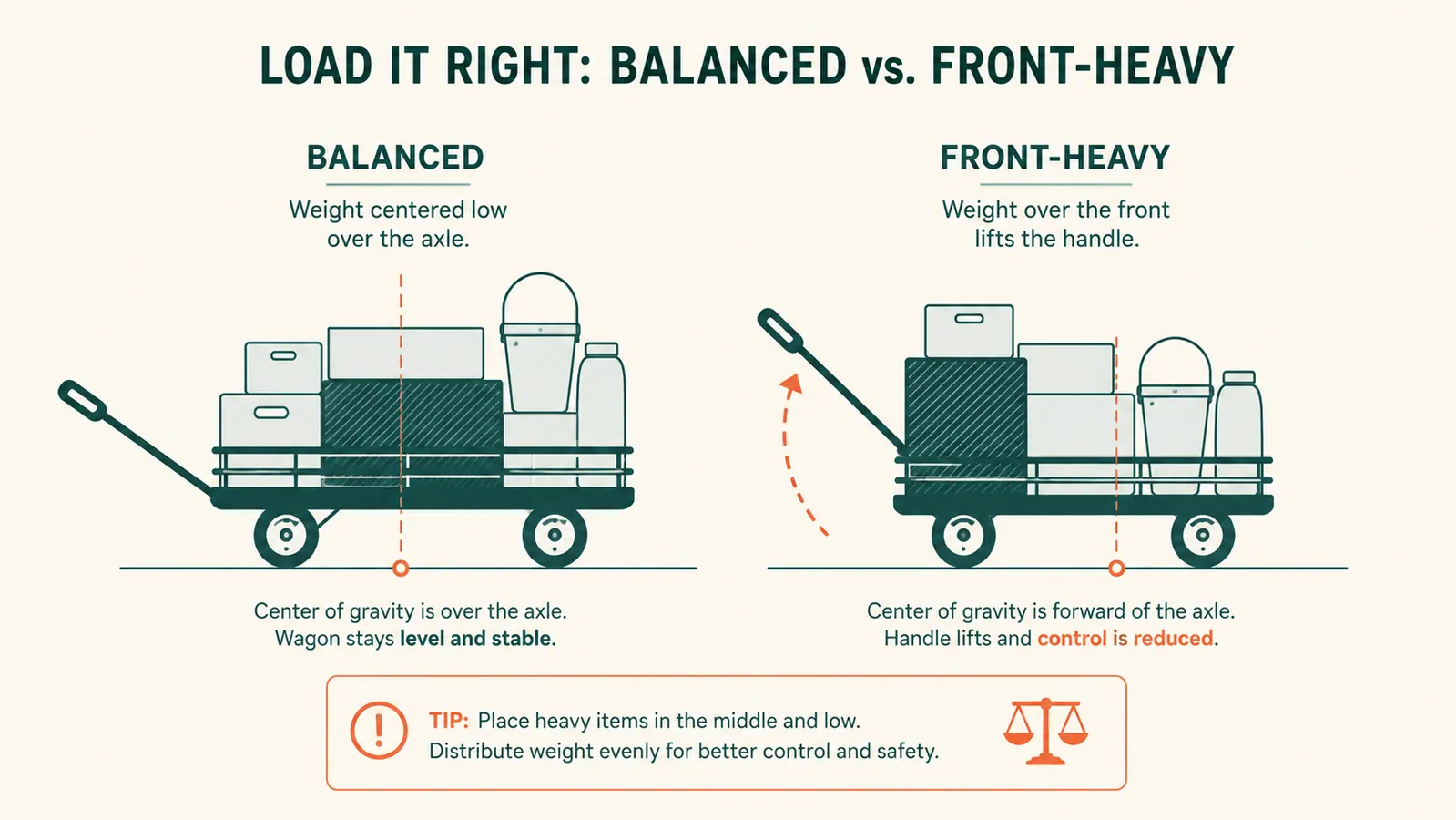
The single heaviest thing I'm hauling, almost always the cooler, goes in first, and it goes in low and centered, directly over where the wheel axle sits underneath the fabric bed. That's the pivot point of the whole wagon. Weight sitting right over the axle stays stable no matter which direction the Mac Sports wagon tips or rocks on uneven ground, because it isn't far from the point the wagon is actually balancing on.
I learned this the hard way at one of my state parks, sliding a full cooler toward the back of the bed because that's where there happened to be room. Every bump sent it rocking, and rocking weight at the back end is what tips a wagon over sideways on a rutted path. Centered and low, over the axle, is the only placement that stays quiet no matter what the ground does underneath it.
This wagon is rated for 150 pounds, and I want to be honest about that number rather than wave it off. I have never loaded anywhere close to it on purpose, and I don't recommend anyone else does either. Overloading a collapsible wagon is exactly how the fabric bed tears loose from the frame attachment points, or how the steel frame itself bends under weight it was never built to carry at that concentration. A full cooler, two chairs, a water jug, and a bag of dog food together usually lands me somewhere around sixty to eighty pounds, and that's plenty of load for a wagon this size to manage well for years. Pushing toward the rated ceiling on a regular basis is asking for a repair bill, not a convenience.
Step 3: Keep the Front Light So the Handle Doesn't Fight You
The front end, the end nearest the handle, is where I put the lightest things I'm hauling. A bag of marshmallows, a rolled-up tarp, a lightweight tackle box, that sort of thing. There's a real mechanical reason for this, not just tidiness. Weight loaded toward the front of the Mac Sports wagon, close to where the handle attaches, acts like the short end of a lever every time you lift the handle to pull. The heavier that end gets, the more the handle wants to rise up on its own, fighting your grip instead of following it.
That's exactly what happened to me that day on Kentucky Lake. I'd set the firewood up near the front because it was the last thing I grabbed and the easiest spot to drop it, and the handle kept trying to jump out of my hand on every uneven patch of gravel. Once I moved the firewood back toward center and kept the front end light, the handle settled down and stopped arguing with me the whole walk to the site.
Step 4: Stay Below the Rail Line
Every collapsible wagon has a rail line, the top edge of the fabric bed where the frame's side rails sit. I try never to stack anything above that line if I can help it. Gear that rises above the rails has nothing holding it in from the sides anymore, which means the first hard bump, root, or gravel washboard section sends it rolling right off the top.
When I've got more gear than fits below the rail line in one trip, and that happens on longer stays when I'm also hauling groceries in from the truck, I just accept it's going to be two trips instead of one. A wagon overloaded above its own rails isn't saving me anything if half the load ends up scattered across the gravel path halfway to the site.
Step 5: Strap or Nest Everything So Nothing Shifts on Gravel
Once the heavy item is centered and the light stuff is up front, I spend an extra thirty seconds nesting everything so it can't slide. Folding chairs go in folded, standing on their edges along the sides of the bed rather than laid flat on top, which wedges them against the frame instead of leaving them free to slide. The water jug goes into whatever gap is left, usually wedged between the cooler and a chair so it has nowhere to travel.
For anything loose, a bag of ice, a sack of kindling, a stack of folded blankets, I run a cam strap or a couple of bungee cords across the top of the load, hooked to the frame rails on either side. Gravel paths and packed dirt loops both have enough small bumps to walk a loose item right out of the bed over the length of even a short haul, and a strap costs you almost nothing in time compared to chasing a rolling water jug down a slope.
Step 6: Load in the Reverse Order You'll Need Things
This one took me longer to figure out than it should have. Whatever I'll need first at the campsite goes into the wagon last, sitting on top or nearest the front where I can grab it without unloading the rest. If I'm setting up the chairs before I even think about the cooler, the chairs should come out easiest, not be buried under everything else.
I load in this order now. Cooler and heaviest items first, centered low. Water jug and dog food next, wedged in around the cooler. Firewood or groceries after that, kept toward center rather than the front. Chairs and anything I need the moment I arrive go in last, sitting on top where I can lift them straight off. It's a small habit, but it means I'm not digging through a fully loaded wagon at the tailgate trying to find the one folding chair I actually need first.
Step 7: Handle a Slope Like You Mean It
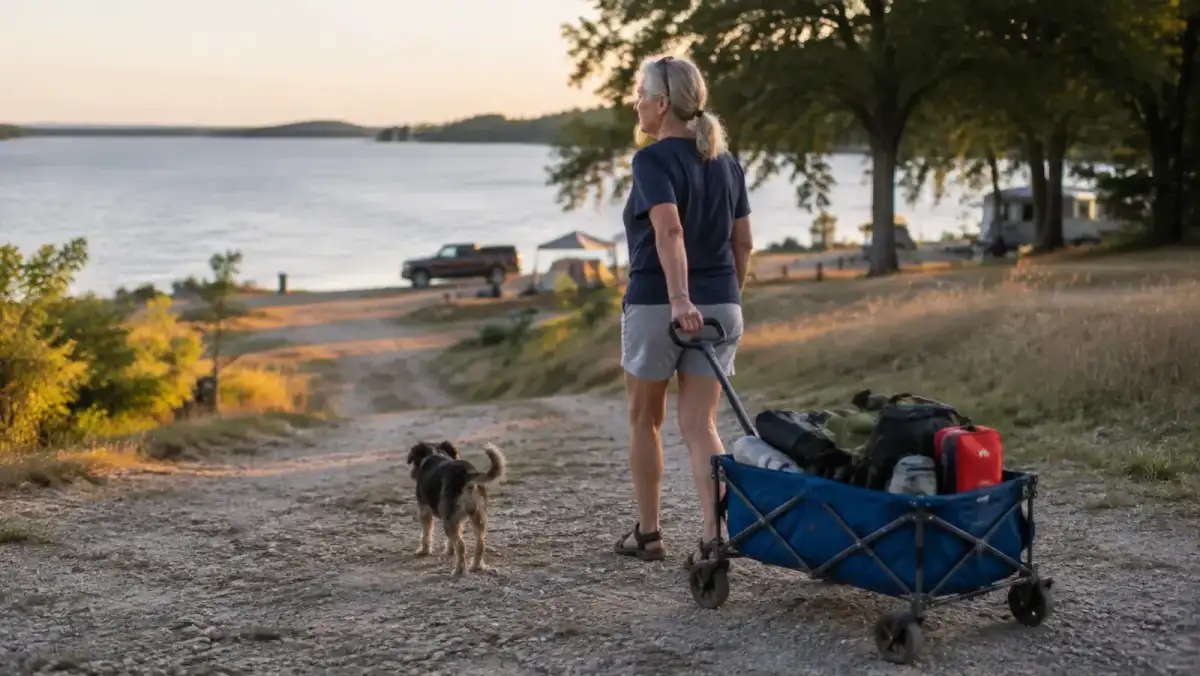
Most of my campgrounds have at least some grade between the parking area and the site, and a loaded wagon behaves differently on a slope than it does on flat gravel. Going downhill, I never let the wagon get ahead of me. I keep the handle short, walk slightly to the side rather than directly in front, and let my own weight act as a brake rather than trusting the wheels to stop on their own if something startles Biscuit and I need to stop fast.
Going uphill is actually the easier direction with a well-loaded wagon, since gravity is working with the centered weight instead of trying to run it past you. The one habit that's served me well on any real grade, up or down, is pulling rather than pushing. A wagon you're pulling stays in your line of sight the whole time, and you feel a shift in the load through the handle before it becomes a real problem. Pushing a loaded wagon on rough or sloped ground means you're steering something you can't see clearly, and by the time you notice it's tipping, it's already tipping.
The math on trips saved is simple once you've loaded it right a few times. A normal two or three night stay used to run me four trips from the truck, one for the cooler, one for the chairs, one for the water jug, and one more for anything I'd forgotten in the first three. Loaded the way I've laid out here, it's one trip for setup and one more for breaking camp, sometimes a second trip on the longer stays when I'm also hauling in a week of groceries. That's not a small difference when you're doing all of it alone and your knees have opinions about stairs and gravel by the third trip.
What Else Helps
None of this is complicated once it's a habit. It's mostly common sense that gets skipped in the parking lot rush to get everything to the site before dark. Get the loading order right and the wagon does the rest of the work honestly, no bungee acrobatics, no chasing a rolling cooler down a slope. I put together the fuller case for why a wagon earns its spot at every site in my comparison against a rigid steel wagon, if you're still deciding which style fits how you camp. And if you want the full rundown of how this exact wagon has held up week to week, wheels, fabric, and all, that's in my honest review.
The wagon does the carrying. Loading it right is the part that decides whether it does that carrying once, or whether you're chasing gear across a gravel path halfway to the site.
One load, in the right order, is the whole trick.
I go through every detail of how this wagon has held up to real loading and real weather in my full honest review, cons included.
Amazon Check Today's Price on Amazon →