
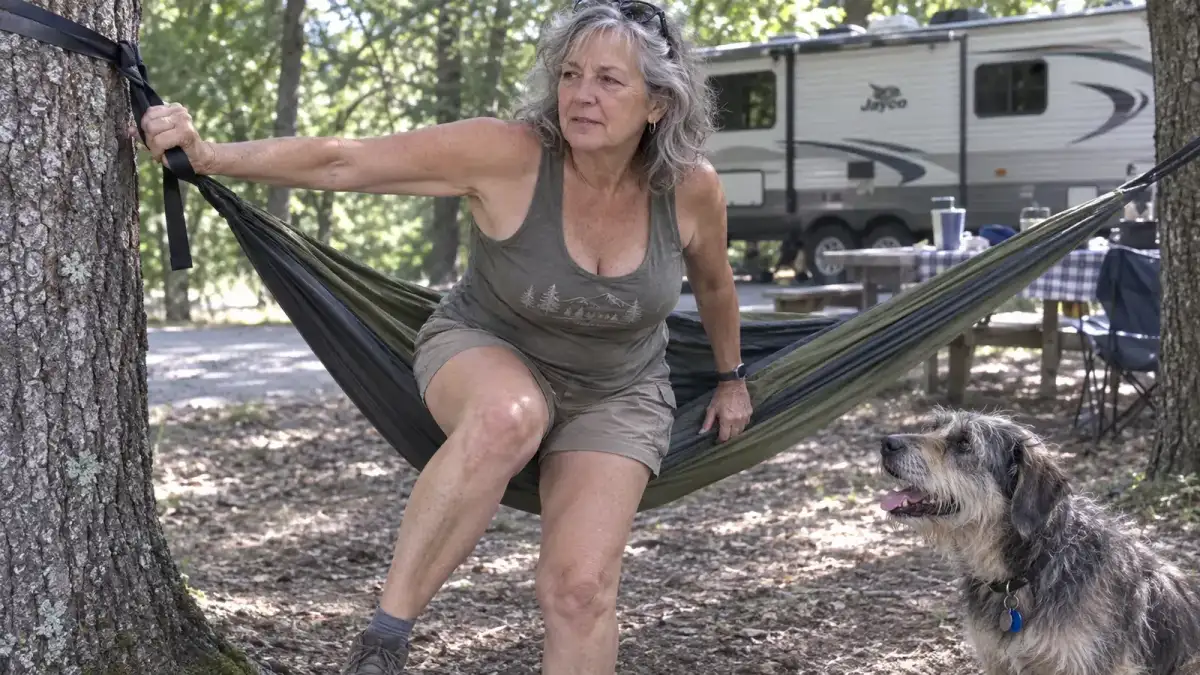
I said some flattering things about the Wise Owl Outfitters hammock in the piece I wrote after a full season of hanging it at nearly every campsite from a Corps of Engineers stretch on Kentucky Lake to four different state parks, and every word of that was true. This review is going to sound different, because it's the one I wish somebody had written for me before I spent my own money, the one that tells you what the box, the five-star average, and even my own long-term writeup left out. I'm sixty-six, I camp alone in a 24-foot trailer with my dog Biscuit outside and my cats Pearl and Sable holding down the fort inside, and there's a particular kind of honesty that only shows up when you're the one person responsible for getting yourself out of a piece of gear with nobody around to notice if it goes wrong.
None of what follows means I'd send it back. I still hang it several times a week, and I still think it's a smart, inexpensive addition to a camp kit. But if you read gear reviews before you buy the way I do, you already know a five-star average hides a few things nobody wants to be the one to say out loud. I'm going to say them, plainly, the way I'd say them to a neighbor at the next site over rather than the way a listing page would.
The Quick Verdict
A genuinely comfortable daytime rest tool with a few real limits the enthusiastic reviews never mention. Good hammock. Not the overnight bed the photos suggest.
Amazon Check Today's Price →Nobody mentions the getting-out part. I'm about to.
This is the same hammock and tree straps I've used all season, warts and all. If you want to see it for yourself before reading the rest of this, here's where I've been buying it.
Amazon Check Today's Price on Amazon →How I've Used It
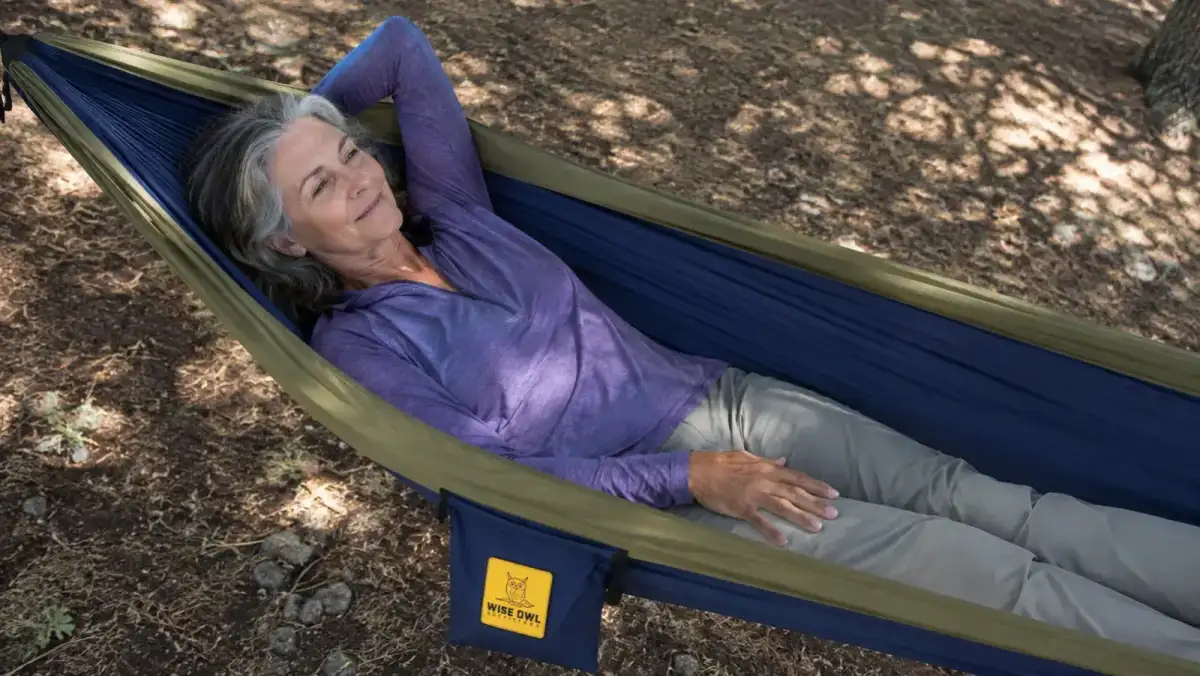
I don't sleep in this hammock overnight, and that's probably the single biggest thing that separates how I actually use it from how it gets marketed. Mine comes out most afternoons for an hour or two of real rest between chores, and some mornings before a site gets hot. I've never once zipped myself in at ten at night and woken up in it at six. That's not a knock on the Wise Owl hammock. It's a description of what it actually is for someone my age, which is a very good outdoor recliner, not a tent replacement.
That distinction took me most of a season to admit to myself, mostly because the marketing photos and plenty of the glowing reviews show people looking like they slept there all night under the stars. I tried it twice, once at a state park in May and once at a Corps of Engineers site in September, both nights when the forecast looked ideal. Neither time did I make it past two or three in the morning before giving up and climbing the trailer steps to my actual bed. I'll get into exactly why further down, but I want to say it plainly up front, because I think it's the single most useful thing I can tell a reader my age before they spend their own money expecting an overnight bed.
Getting In Is the Easy Part
Every review I read before buying talked about how easy this hammock is to get into, and they weren't wrong. Sitting on the edge, swinging your legs up, letting the fabric wrap around you, that part takes about five seconds and doesn't ask much of your knees or your balance. What none of those reviews mentioned, not one that I found anywhere, was getting back out.
Getting out of a hammock means finding the edge again from inside a piece of fabric that's actively folding around you, swinging your legs down while your upper body is still half-cocooned, then pushing yourself upright with your arms doing work your legs would normally do standing on solid ground. At sixty-six, with a back that already complains on a bad day, that's not a small ask. The first few times, I ended up half-rolling out sideways more than standing up gracefully, and I caught myself wondering what would happen if that roll ever went wrong with nobody nearby to hear me. Nobody is ever nearby. That's kind of the whole point of how I camp.
I've gotten better at it since. I've learned to keep one hand on the tree strap while I swing my legs down, using it almost like a handrail, which the Wise Owl hammock obviously wasn't designed for but works well enough once you know the trick. I bring this up because if you're reading this at sixty, seventy, or recovering from a hip or knee problem, the getting-out part deserves a lot more thought than the five-second getting-in part every other review seems to focus on entirely.
I've mentioned all this to a couple of camping neighbors over the seasons, both around my age, and gotten the same sheepish laugh both times, like I'd finally said the quiet part out loud. One of them told me she just avoids the hammock past midafternoon now, back while there's still enough daylight that fumbling for her footing feels less risky than doing it in shadow. That habit isn't in any review I've read, and it probably should be, because it's exactly the kind of practical detail that decides whether this is a smart buy for someone my age or a small daily gamble.
The Right Two Trees Are Rarer Than the Listing Photos Make It Look
The product photos show a hammock strung between two perfectly spaced, perfectly healthy trees with room to spare in every direction. Real campsites aren't staged that way. Across four state parks and three Corps of Engineers campgrounds, I'd guess I've had genuinely ideal tree spacing, meaning two solid trunks somewhere between ten and fifteen feet apart with clear, level ground underneath, at maybe half the sites I've stayed at.
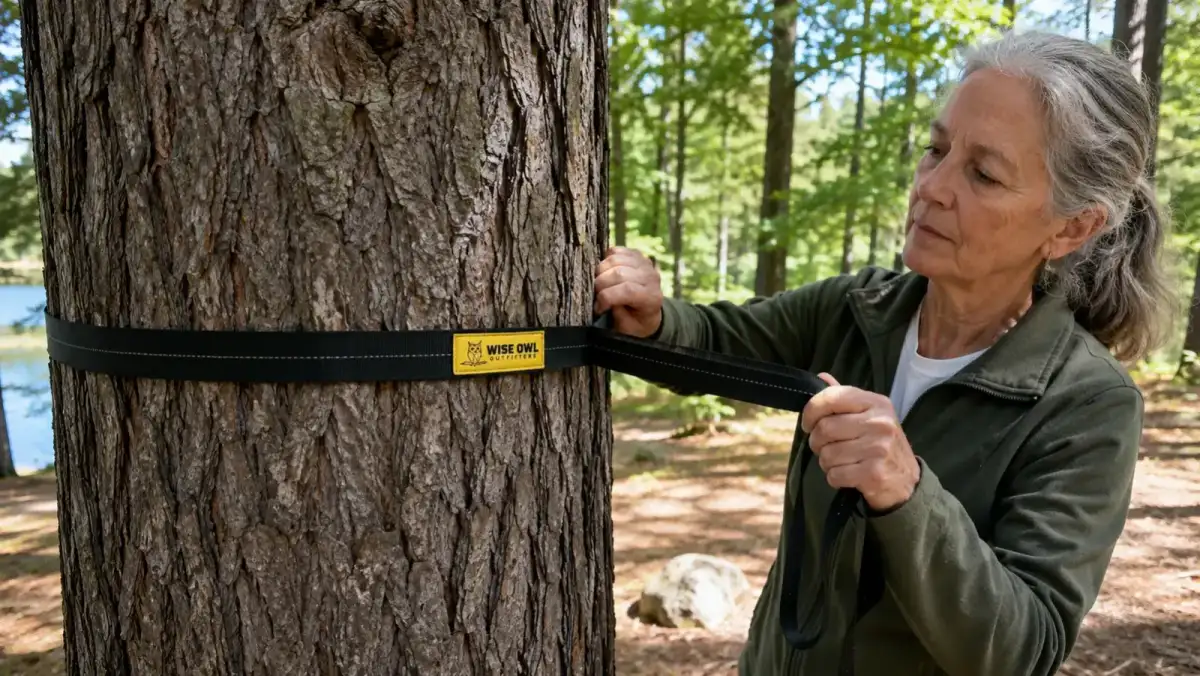
The included straps are a decent length, long enough to wrap a fairly thick trunk with slack to spare, but they aren't infinite, and once you're wrapping one around a tree wider than most of the oaks I've used, you run out of adjustment room fast. I've had to carry the hammock and my folding stool ten, fifteen, once almost thirty feet off my actual site to find two trees that would cooperate, which is fine when you're doing it for the view but a genuine hassle when you only wanted to lie down for twenty minutes between chores.
A few sites I've stayed at, mostly newer loops with young trees or pads cut into open grass for easier RV access, simply didn't have two trees close enough together at all, straps or no straps. That's not a flaw in the hammock. It's a fact about a lot of modern campgrounds that nobody selling a hammock has any reason to mention, and it's worth a quick look at a site's satellite photos before you count on this being your rest spot for a whole trip.
The Shoulder Squeeze, and the Fix Nobody Puts on the Box
Lie straight down the centerline of this hammock, which is how it looks most natural to climb in, and within a few minutes your shoulders start pulling in toward each other as the fabric curls up both sides. It isn't painful right away, but it adds up, and on a longer rest it turned into a tightness across my upper back that undid some of the relaxation I was there for in the first place.
The fix, which I only found by accident and later confirmed on a couple of hammock camping forums, is lying on the diagonal instead of straight down the middle. Angle your body corner to corner rather than end to end, and the fabric flattens out underneath you instead of curling up around your shoulders. It felt wrong the first few times, like I was doing it badly, but it's the difference between a genuinely flat, comfortable lie and that shoulder squeeze creeping back in after fifteen minutes.
I wish this had been printed on the packaging, or at least included with the strap instructions, because it changed how much I actually enjoy using this hammock. Instead I spent close to six weeks of the season assuming the squeeze was just what hammocks felt like, when it turned out to be a setup problem with a genuinely easy answer.
Cold From Underneath, in Both Spring and Fall
A hammock has nothing insulating you from below. That sounds obvious written down, but it caught me off guard both times I tried it overnight, once at a state park in May when the air felt perfectly mild sitting by the fire, and once at a Corps of Engineers site in late September under similar conditions. Both nights, within twenty or thirty minutes of lying still, the cold coming up through the fabric from underneath got uncomfortable in a way that had nothing to do with the air around me.
Hammock campers call it convective heat loss, meaning your own body weight compresses whatever's under you and lets moving air pull your warmth straight through thin fabric, and it's worse than sitting in an open chair in that same temperature because there's no barrier at all beneath your back. I didn't know the term going in. I just knew I was shivering from below while my face felt perfectly fine.
For an afternoon nap in the heat of a summer day, this is a non-issue, arguably a benefit, since the airflow underneath keeps you cooler than a chair would. But it's the reason I don't try to sleep in this hammock overnight in shoulder season anymore, and it's the reason anyone picturing a cool spring or fall night under the stars should know that a hammock alone, without an underquilt or a pad, is going to feel colder than a trailer bed at exactly the hours you'd want to be warm.
No Net Means You're Feeding the Bugs Too
This hammock doesn't come with any kind of bug netting, and depending on where and when you camp, that matters more than the reviews ever let on. At my Kentucky Lake site during a warm week, I learned this within about ten minutes of lying still at dusk, which happens to be exactly when mosquitoes near water get serious about their evening plans.
During the day, in a breeze, at most of the shaded sites I favor, it's rarely been a problem worth mentioning. But dusk and dawn near any water, or after a rain, turned my relaxing hammock time into a slapping match more than once, and I've since started planning my hammock hours around the bug clock as much as the shade, using it midday and early afternoon and giving up the evening slot entirely at the buggier sites.
If bugs bother you more than they bother me, or you're planning to camp somewhere genuinely mosquito-heavy, factor a separate bug net in as a real added cost and a real added step, not an afterthought. That's on top of whatever this hammock costs on its own, and it's a detail I never once saw mentioned in the reviews that convinced me to buy it in the first place.
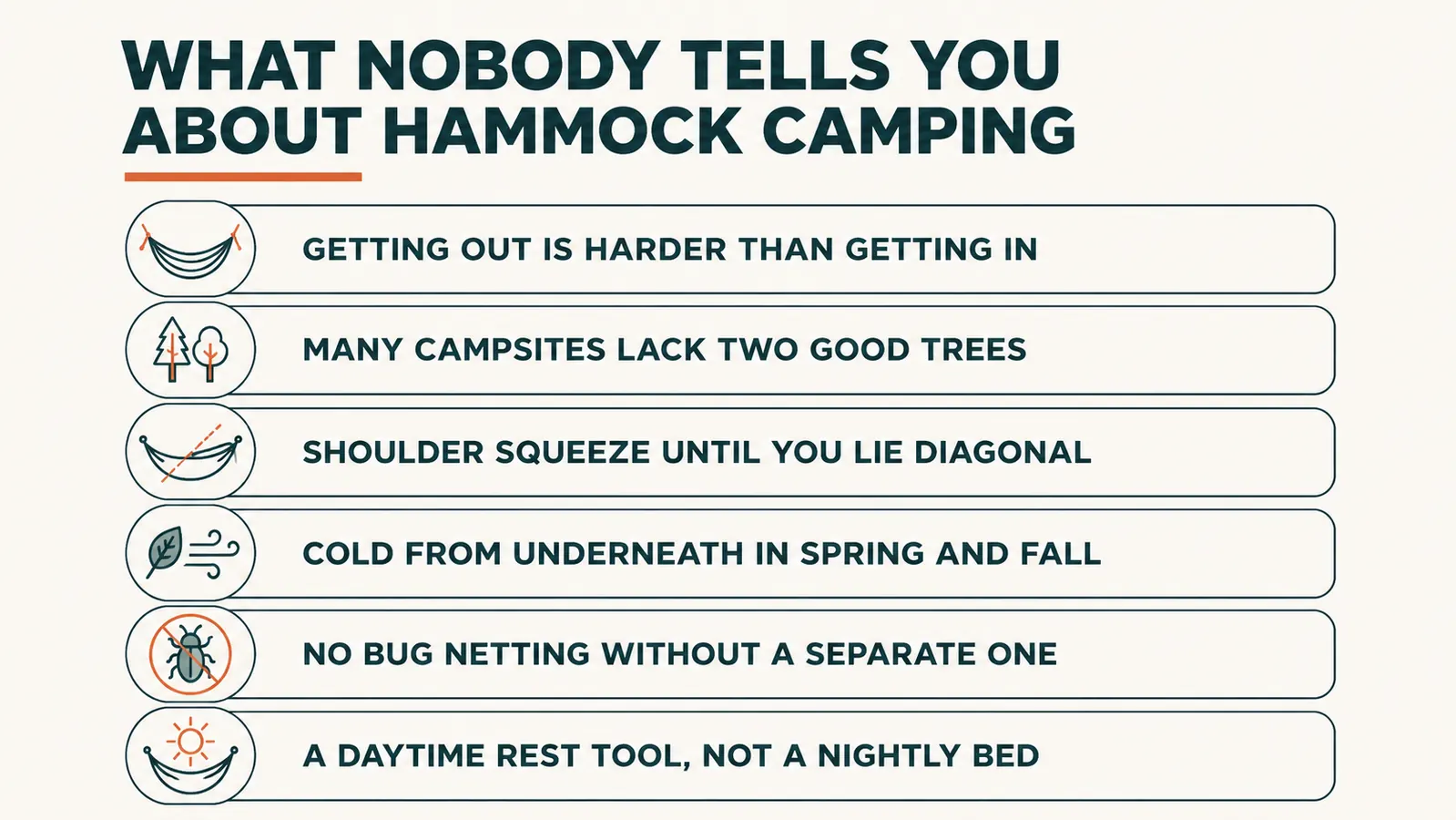
Put those three things together, the trouble getting out, the cold that creeps up from underneath, and the bugs that show up at exactly the hours you'd want to be lying still, and the honest picture is that this is a daytime rest tool for most people my age, not a nightly bed. That's not a complaint so much as a correction to how it gets talked about online, and it's the single piece of framing I wish I'd had in hand before I ever strung it up the first time.
What I Liked
- Comfortable, breathable rest for daytime naps and short breaks between camp chores
- One person can set it up solo in minutes once two workable trees are found
- The diagonal lie genuinely solves the shoulder squeeze, once you know to use it
- Packs down small enough to bring along even on trips where you're not sure you'll use it
Where It Falls Short
- Getting out is noticeably harder than getting in, especially for an older back or bad knees
- Finding two properly spaced, sturdy trees isn't guaranteed at every campsite
- No insulation underneath means real cold in spring and fall, even when the air feels mild
- No bug net included, and dusk near water can turn a quiet nap into a nuisance
I don't need a hammock to look perfect in a photo. I need it to tell me the truth about what happens when I try to get out of it alone at sixty-six, and most reviews never get there.
Who This Is For
This is a good buy for someone who wants a comfortable daytime rest spot at camp, who has decent tree cover at most of the places they stay, and who isn't counting on it to replace an overnight bed. If you camp the way I do, in and out of the trailer, chasing shade in the afternoon and using the diagonal lie once you know it, it earns its space without asking much of you in return. I wrote up a companion piece on how to actually hang it well if you want the setup details that would have saved me some trial and error this season.
Who Should Skip It
Skip this if you're picturing overnight sleeping in the woods, if your knees or back already make getting up off the ground a project, or if you camp mostly at sites without much tree cover. I'd also skip it if you're the kind of camper who wants one piece of gear to do everything, because this one does one thing well and several things not at all. I still think it's one of the better small comforts I've added to my kit, which is why I wrote a whole separate piece about how much it's helped my back, but it has real limits that deserve an honest look before you spend money expecting it to be something it isn't.
Go in with your eyes open about what this can and can't do, and it earns its spot.
Same hammock, same tree straps, still the first thing I reach for on a warm afternoon, even with everything above being true.
Amazon Check Today's Price on Amazon →