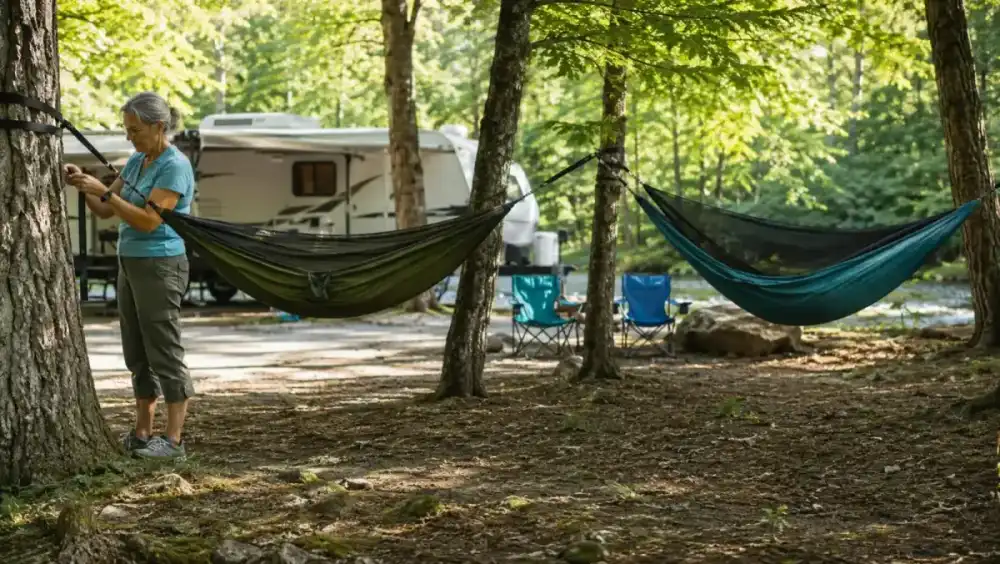
If you've spent any time looking at camping hammocks, you've run into these same two names over and over: Wise Owl Outfitters and ENO. Both show up on every gear forum, both have loyal fans, and both look nearly identical in a thumbnail photo. They are not the same hammock, though, and the differences matter a lot more once you're the one hanging it alone at a campsite with nobody around to hold the other end.
The short answer, if you want it before I walk through the details: the Wise Owl Outfitters hammock is the better buy for most car and trailer campers, mostly because it comes with tree straps in the box and costs less than ENO's hammock plus the straps ENO doesn't include. ENO earns real respect on fabric feel and color selection. Neither is a bad hammock. They're built for slightly different campers, and I'll show you exactly where each one pulls ahead.
I get why these two end up compared so often. They're both nylon parachute-style hammocks in roughly the same price neighborhood, both marketed with photos of someone swinging peacefully between two trees, and both easy to find at any outdoor retailer or on Amazon. But they were designed for slightly different campers. ENO grew up in the backpacking and thru-hiking world, where you're expected to already own a strap system and you're optimizing for the lightest possible fabric. Wise Owl built its whole kit around the idea that a first-time buyer should be able to open one box and go, straps included. That single design choice explains most of what follows.
| Wise Owl Outfitters | ENO DoubleNest | |
|---|---|---|
| Weight capacity | Up to 500 lbs | Up to 400 lbs |
| Tree straps included | Yes, straps and carabiners come in the box | No, Atlas straps sold separately |
| Packed size and weight | About the size of a grapefruit, roughly 11 oz | About the size of a small cantaloupe, roughly 19 oz |
| Fabric feel | Ripstop nylon parachute fabric, slightly grippier weave | High-tenacity nylon taffeta, noticeably softer and smoother against skin |
| Stitching reputation | Triple-stitched seams, solid but newer to the market | Bar-tacked seams with decades of field-tested reputation among thru-hikers |
| Solo setup time | About 10 minutes once straps are wrapped and clipped | About 15-20 minutes once you've also dug the separate straps out of your pack |
| Color and print options | Solid colors, a handful of choices | Wide range of solids and prints, more selection overall |
| Total cost to camp-ready | Mid-range total, straps included | Mid-range once you add the required straps |
Where Wise Owl Wins
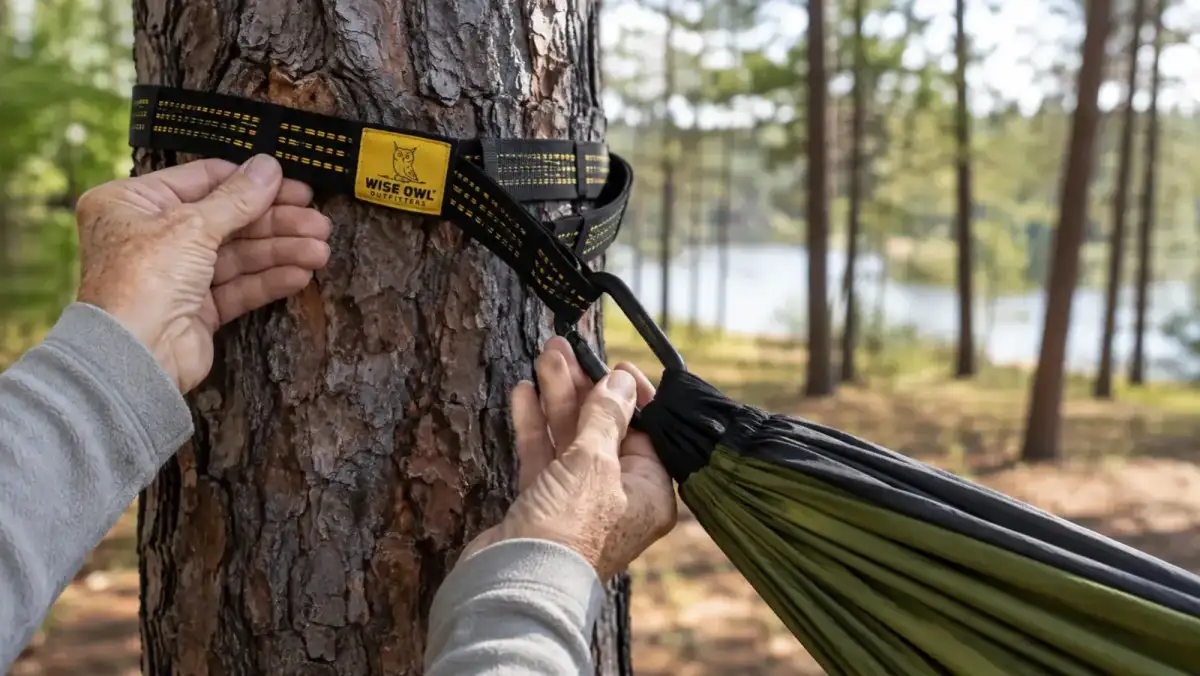
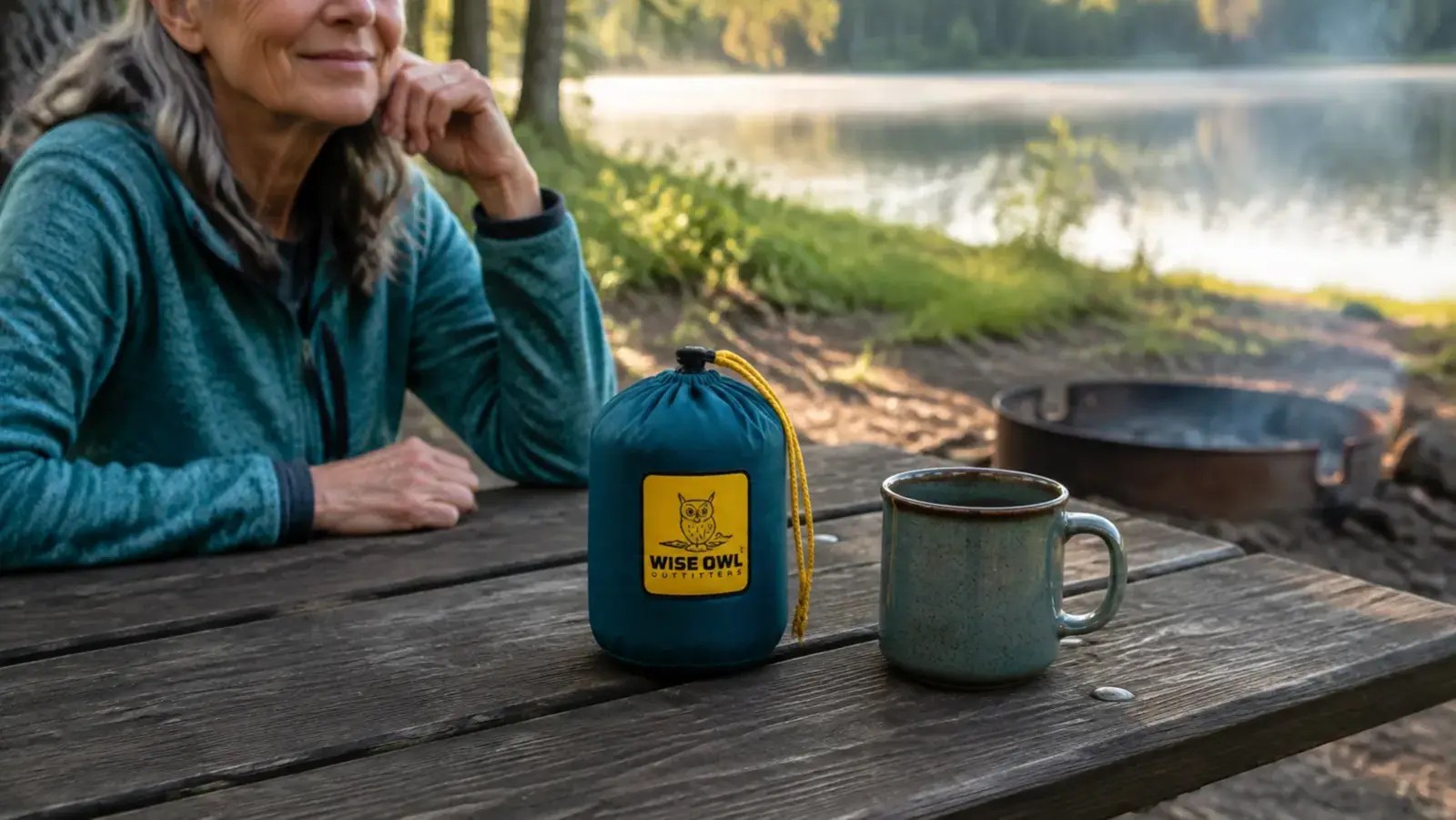
The tree straps are the whole story for a lot of us. I camp alone, and every piece of gear I own gets judged on one question: can I set this up by myself without needing a second pair of hands or a trip back to the trailer for a part I forgot? The Wise Owl hammock comes with its tree straps and carabiners already in the stuff sack. You open the bag, you have everything you need. That sounds small until you're standing at a Corps of Engineers site on Kentucky Lake at four in the afternoon, tired from setting up the trailer, and you don't want to be hunting through gear bins for a strap you bought separately six months ago and haven't seen since.
The weight capacity and the price both favor Wise Owl too, and they connect to each other more than people realize. At 500 pounds rated capacity against ENO's 400, Wise Owl gives more room for error, which matters if you're climbing in with boots on or you've got a dog trying to join you. And at roughly $44 with straps included, you're paying less than ENO's hammock alone runs, before you've even bought what you need to hang it. For a camper watching a fixed income stretch across a full season of trips, that's not a small difference. It's the difference between one purchase and two.
It's worth sitting with that strap question a little longer, because it's really the whole ballgame on price. ENO sells its hammock alone, and then sells its Atlas straps as a completely separate purchase, which is a normal way to do business in the backpacking world where a hiker might already own three or four different strap sets from past hammocks and tarps. But if you're buying your first hammock, that's not one decision, it's two, and most first-time buyers don't realize it until they've already checked out and the box arrives with no way to hang what's inside it. I've talked to more than one camper at a site who assumed straps came standard and had to make a trip into town for rope or bungee cord to make do for the weekend. Wise Owl closes that gap by pricing the whole kit as one purchase from the start, which is why the dollar difference in the table above understates the real gap. You're not comparing $44 to $70. You're comparing a finished kit to a hammock that still needs something bought before it works.
There's a third thing that doesn't show up on a spec sheet but matters at a real campsite: the carabiners that ship with the Wise Owl straps are large enough to work with cold fingers on a chilly spring morning. I've fumbled with smaller clips on other gear at fifty degrees and lost patience fast. These aren't fussy. You wrap, you loop the strap through the ring, you clip, and it holds. If your hands aren't what they used to be, that's worth more than it sounds like on paper.
Where ENO Wins
I want to be fair here, because ENO didn't earn its reputation by accident. The DoubleNest fabric is genuinely softer against the skin, a high-tenacity nylon taffeta that feels almost silky compared to the grippier ripstop weave on the Wise Owl. If you're the type who lies in a hammock for an hour with a book, you'll notice that difference on your arms and the back of your neck. It's subtle, but it's real, and ENO deserves credit for it.
ENO also wins on selection and reputation. There are more colors and prints to choose from, and the brand has decades of thru-hiker and backpacker use behind it, which counts for something when you're trusting a piece of fabric to hold you eight feet off the ground. If color choice and brand pedigree matter to you as much as function does, that's a legitimate reason to lean ENO, especially if you already own a set of straps from another hammock and don't need to buy them again.
And I'll say this plainly, because a fair comparison has to admit when the other brand is the right call for a different kind of camper: a thru-hiker weighing every ounce in their pack has good reason to pick ENO over Wise Owl, and it would be dishonest of me to pretend otherwise. That camper likely already owns a strap system from a previous hammock or tarp setup, so the straps-included advantage I keep coming back to simply doesn't apply to them. They're optimizing for trail miles, not campsite comfort, and the DoubleNest's fabric weight and decades of thru-hiking use make it the sensible pick for someone counting grams on a multi-day trail. That's just not who I am, and it's probably not who you are either if you're reading a hammock comparison written by a woman who tows a 24-foot trailer instead of carrying everything on her back.
Straps included, price lower, and one less thing to forget at home.
This is the hammock I actually hang at nearly every site now. Tree straps and carabiners come in the bag, so there's no second order to place before your next trip.
Amazon Check Today's Price on Amazon →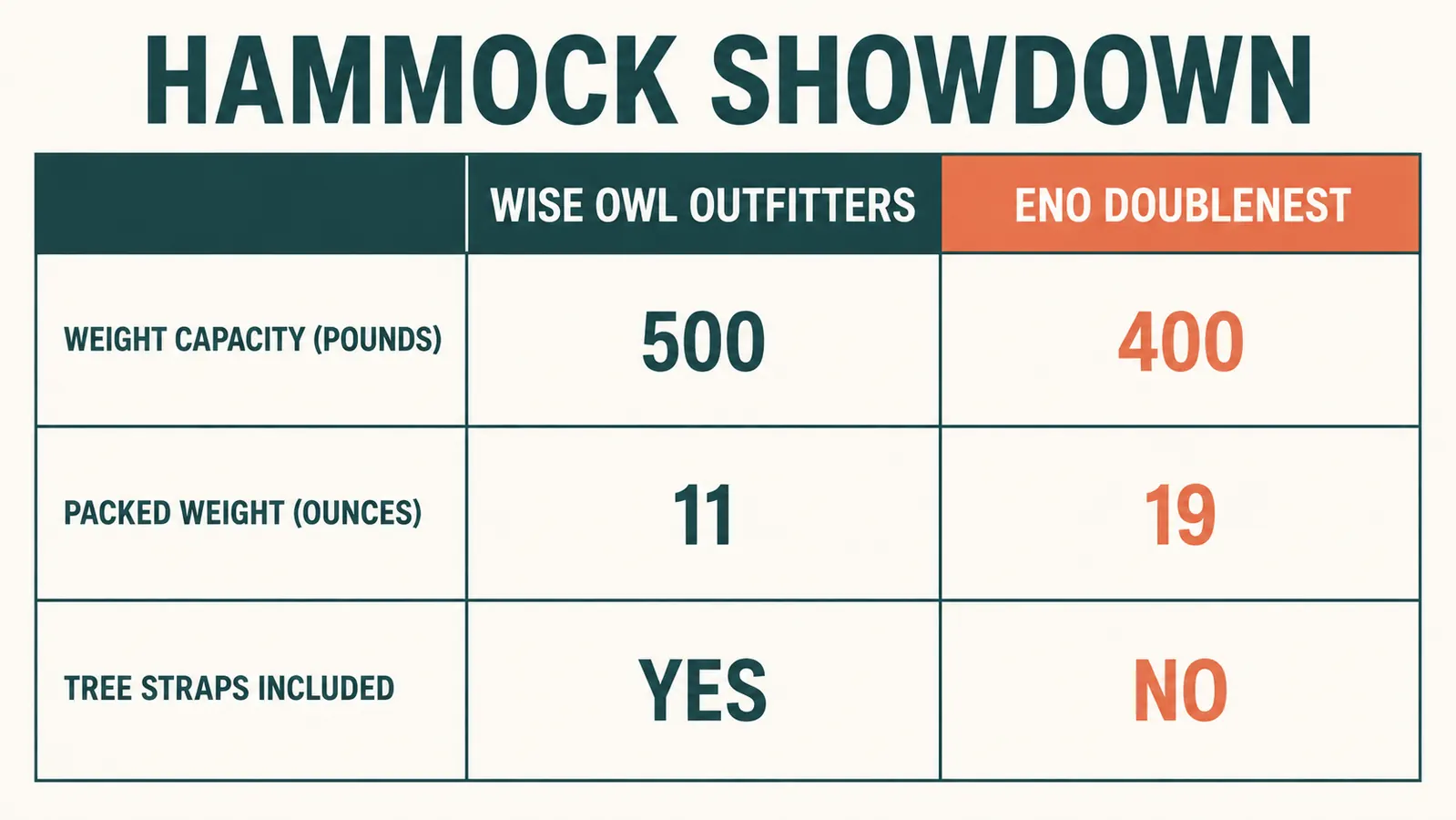
The Real Test: Setting It Up Alone
I've hung both kinds of straps at this point, borrowed a friend's ENO setup for a weekend just to see for myself, and the gap isn't in the hammocks themselves so much as in what shows up in the box. With the Wise Owl straps already clipped in, I pick two trees, wrap, clip, and I'm done in ten minutes without opening a second bag. With the ENO hammock and a separate set of Atlas straps, I'm managing two stuff sacks instead of one, and if I've packed them in different bins, that's an extra five or ten minutes of digging around a trailer before I've even started.
None of that is a knock on the ENO hammock itself. The fabric is lovely and the brand has earned its following honestly. It's just built with the assumption that you'll pair it with whichever straps you already have, which makes sense if you're a backpacker rotating gear between trips. For someone like me, setting up camp solo at a new site every few days, one box with everything in it beats a better fabric with an extra step attached.
There's also the matter of tree spacing. Both hammocks want anchor points somewhere between ten and fifteen feet apart, and neither one is forgiving if your two trees are too close or too far. What changes solo is how much patience you have left for a second attempt. With Wise Owl's straps already clipped in, moving to a different pair of trees costs me two minutes. With a separate strap system, it means unclipping, recoiling, and re-threading before I even try the new spot, which is exactly the kind of fussing I don't have the patience for after a long drive.
Room for a Dog, or Just for You
Biscuit likes to climb in with me, uninvited, whenever he catches me lying down at camp. That's a habit I've made my peace with, but it means the extra hundred pounds of rated capacity on the Wise Owl isn't just a number for me. At 500 pounds against ENO's 400, I've never once worried about the two of us together, even fully dressed with boots still on. Both hammocks are wide enough for a diagonal lie that keeps your spine flat, which is the whole point of a camping hammock over a hiking one, but if you're bringing a dog along for the ride, or you simply weigh more than the marketing photos suggest their models do, that extra buffer on the Wise Owl matters more than it looks like on a spec sheet.
Here's the honest truth about those numbers, though. Neither 500 pounds nor 400 pounds is the thing that's actually going to fail you at a real campsite. Most solo campers, dog included, come in well under either limit. What actually gives out first, if anything ever does, is a strap wrapped around a tree that's too thin, or a strap cinched at a bad angle, or a knot in a cheap length of rope somebody used instead of the real straps because they didn't want to spend the extra money. The hammock fabric and stitching on both of these brands are rated well past what any solo camper needs. The tree and the strap system are where the actual risk lives, which is one more reason I'd rather have the matched, tested straps that came in the box than whatever I improvised to save a few dollars.
Neither hammock ships with bug netting built in, so that's a wash between them. If no-see-ums are a real problem at your usual sites, you'll be adding a separate netting option to either one, and that's a fair cost to plan for regardless of which brand you pick.
Who Should Buy Which
If you camp the way I do, mostly solo, mostly mid-week, more concerned with getting your feet up after setting camp than with gram-counting or fabric feel, the Wise Owl is the easier answer. It costs less once you account for straps, it's rated to hold more, and it asks nothing extra of you at setup. It also travels well in a trailer, since the whole kit lives in one small sack that fits in a side compartment without crowding out anything else.
If you already own a set of hammock straps from a previous trip, care more about that silky fabric feel, and want the widest range of colors on the market, ENO is a fine choice and you won't be disappointed in the fabric quality. Just budget for the straps if you don't already have a set, because ENO's price tag on its own doesn't tell the whole story.
I wrote up the full long-term picture in my season-long Wise Owl review if you want to see how it's held up after months of regular use, and there's an even blunter version, cons and all, in my honest review. Between the two of them, you'll have everything I know about this hammock before you spend a dollar on either one.
Skip the second order for straps you don't own yet.
Straps and carabiners included, packs down to about a grapefruit, and it's the one I keep bringing back out every season.
Amazon Check Today's Price on Amazon →